Illinois caregiver leave and pay
Last checked: May 18, 2026
If you need time off work to care for a parent, spouse, adult child, or another family member in Illinois, start with the type of leave you need. Illinois does not have a broad state paid family leave insurance program that pays many weeks of wage replacement for family caregiving. But many Illinois workers may have up to 40 hours of paid leave for any reason, and some workers may also have unpaid job-protected leave under the federal FMLA.
Quick answer
Illinois does not have a broad paid family leave insurance program for caregivers. Illinois does have paid leave for many workers under the Paid Leave for All Workers Act, but that leave is usually limited to up to 40 hours per year and can be used for any reason.
If you need more than a few days off, ask your employer about FMLA, paid time off, sick leave, union leave, or local paid leave rules in Chicago or Cook County. If your real need is help paying for care at home, check Illinois Medicaid home care, the Community Care Program, DRS Home Services, VA caregiver benefits, and respite programs.
Start here
- Ask your employer or HR for your written leave options. Ask about Illinois Paid Leave for All Workers, FMLA, sick leave, PTO, short-term disability, union leave, and any local Chicago or Cook County rules.
- Write down the care need. Note the family member’s diagnosis, appointments, safety needs, help with bathing or meals, and the dates or hours you need off.
- Call the right Illinois office if leave is not enough. For an older adult, call the Illinois Department on Aging Senior HelpLine at 1-800-252-8966. For a person with a severe disability under 60, ask DHS-DRS about Home Services.
Main programs and routes
| Route | Who it may help | Pay or time | Where to start |
|---|---|---|---|
| Illinois Paid Leave for All Workers Act | Many workers in Illinois, except some groups listed by state law | Up to 40 hours of paid leave in a 12-month period. It is not a weeks-long paid family leave program. | Ask HR or your manager for the paid leave policy. If denied, contact the Illinois Department of Labor Leave Rights Division. |
| Chicago or Cook County paid leave rules | Some workers in Chicago or Cook County | Local rules may apply instead of the state paid leave law. | Contact the City of Chicago Office of Labor Standards or the Cook County Commission on Human Rights. |
| Federal FMLA | Eligible workers who need time to care for a spouse, child, or parent with a serious health condition | Up to 12 workweeks of unpaid, job-protected leave in a 12-month period. More time may apply for some military caregiver leave. | Ask HR for FMLA forms and the medical certification rules. |
| Illinois Employee Sick Leave Act | Workers whose employer already gives personal sick leave | May let you use at least part of existing sick leave to care for certain family members. | Ask HR if your sick leave bank can be used for family care. |
| Illinois Medicaid home care and waivers | People who need long-term care at home and meet program rules | Can cover services. In some programs, the care recipient may be able to choose a worker. Approval and worker rules vary. | For age 60 or older, call the Senior HelpLine. For severe disability under 60, contact DHS-DRS Home Services. |
| VA caregiver and pension routes | Veterans and some survivors who meet VA rules | May include caregiver support, a stipend for some approved caregivers, or added VA pension payments for Aid and Attendance. | Contact VA Caregiver Support or review VA Aid and Attendance. |
| Respite and caregiver support | Caregivers who need short breaks, adult day services, or local help | May help pay for short-term relief or connect you to local services. | Call the Senior HelpLine, a local Area Agency on Aging, or the Illinois Respite Coalition. |
Does Illinois have paid family leave for caregivers?
No, not in the way many people mean it.
Illinois does not currently run a broad paid family leave insurance program that pays a worker for weeks while they care for a sick family member. Some states have that type of program. Illinois does not have that broad program as of the date above.
Illinois does have a separate paid leave law. The Paid Leave for All Workers Act lets many workers earn paid leave that can be used for any reason. That can include caregiving, but it is not limited to caregiving. Your employer generally cannot ask why you need this state paid leave, and the state says employers cannot ask for proof tied to the reason for using it.
This matters because a caregiver may need two different things:
- A few paid hours or days off from work. Illinois paid leave, sick leave, PTO, or local paid leave may help.
- Weeks away from work, or money to pay for care. FMLA, employer leave, Medicaid home care, VA benefits, or respite may be the better route.
Important Illinois warning: Rules can change. Counties, managed care plans, waiver contractors, local offices, and employers may use different names for the same type of help. Always confirm with the Illinois Department of Labor, your employer, your managed care plan, the Illinois Department on Aging, DHS-DRS, or VA before you make a work or care decision.
Who qualifies
There is no single Illinois paid family leave test for caregivers because Illinois does not have one broad paid family leave program. The right test depends on the route.
For Illinois paid leave
Many full-time, part-time, seasonal, temp, and on-call workers in Illinois may be covered by the Paid Leave for All Workers Act. State rules list some groups that are not covered, such as many independent contractors and certain workers covered by specific laws or labor agreements.
If you mainly work in Chicago or Cook County, local paid leave rules may apply instead. Ask your employer which rule it follows and which office handles complaints.
For FMLA
FMLA means the federal Family and Medical Leave Act. It is unpaid, but it can protect your job if you meet the rules.
In general, you must work for a covered employer, have worked for that employer for at least 12 months, have enough hours worked in the prior 12 months, and work at a site where the employer has enough workers nearby.
For caregiving, FMLA usually covers care for a spouse, child, or parent with a serious health condition. A parent-in-law is not covered under the basic FMLA family care rule. Some military family leave rules are different.
For Illinois sick leave rules
The Illinois Employee Sick Leave Act does not make employers give sick leave. But if your employer already gives personal sick leave, the law may require the employer to let you use at least part of it to care for certain family members.
Covered family members include a child, stepchild, spouse, domestic partner, sibling, parent, parent-in-law, grandchild, grandparent, or stepparent.
For Medicaid home care or waiver help
Medicaid home care is about the person who needs care, not about your job leave. The person must meet the program’s medical and financial rules.
For many older adults, Illinois Community Care Program screening starts through a local Care Coordination Unit. For people with severe disabilities under age 60, the DHS Division of Rehabilitation Services Home Services Program may be the right door.
Not every family member can be paid in every program. Ask the program directly, in writing if possible: Can this person choose a family member as a paid worker, and what worker rules apply?
How much pay and how much time
Here is the basic split.
| Type of help | Pay | Time | Job protection |
|---|---|---|---|
| Illinois paid leave | Regular hourly rate for paid leave time. Some tipped or commissioned workers have special pay rules. | Up to 40 hours in a 12-month period. Workers earn at least 1 hour for every 40 hours worked, unless the employer frontloads time. | State law bars certain punishment for using protected paid leave, but this is not the same as weeks of FMLA job protection. |
| FMLA | Unpaid, unless paid leave runs at the same time. | Usually up to 12 workweeks in a 12-month period for care of a covered family member with a serious health condition. | Yes, if you and your employer meet FMLA rules. |
| Employer sick leave or PTO | Depends on your written policy. | Depends on your earned balance and policy. | Depends on the leave type. Ask HR if it runs with FMLA. |
| Medicaid home care | May pay an approved worker or provider, not pay you for taking leave from your job. | Based on assessment and plan of care. | No job protection for your outside job. |
| VA caregiver or pension route | May provide a stipend for some approved caregivers, or added pension payments for qualified Veterans or survivors. | Depends on VA approval and care need. | No state job protection by itself. |
If you need both pay and job protection, ask whether your Illinois paid leave, sick leave, vacation, or PTO can run at the same time as FMLA. That may let you keep some pay during part of an unpaid FMLA period.
How to apply
Step 1: Ask your employer for the written policy
Start with HR, payroll, or your manager. Ask for the written policy for:
- Illinois Paid Leave for All Workers Act leave
- FMLA
- sick leave
- PTO or vacation
- short-term disability, if your own health is also involved
- union leave, if you are in a union
- Chicago or Cook County paid leave, if you work there
What to say to HR:
“I need time off to care for a family member with a health condition. Please send me the written policy for Illinois paid leave, FMLA, sick leave, and any paid family or caregiver leave my job offers. Please also tell me what form or notice you need from me.”
Step 2: Use Illinois paid leave for short needs
For state paid leave, ask how much paid leave you have earned and how to request it. The state says workers can use this leave for any reason. For that protected state leave, your employer generally cannot make you give a caregiver reason or doctor note.
This can help with a doctor’s visit, a hospital discharge meeting, a benefits appointment, a care plan meeting, or a short safety problem at home. It may not be enough for a long hospital stay or ongoing daily care.
Step 3: Ask for FMLA if you need job-protected time
If you need more than a short absence, ask HR if you are eligible for FMLA. Your employer may ask for medical certification. That means a health care provider confirms that the family member has a serious health condition and needs care.
FMLA forms are usually handled by your employer. The U.S. Department of Labor has optional forms, including a certification form for leave to care for a family member.
What to say to the doctor’s office:
“My employer asked for FMLA medical certification so I can care for my family member. The form needs to show the health condition, why care is needed, and the estimated schedule or amount of leave. Who at your office handles FMLA forms?”
Step 4: If the problem is paying for care, call the care program office
Paid leave from work is not the same as paying for long-term care at home. If your loved one needs help with bathing, dressing, meals, supervision, adult day care, or safety checks, ask about home and community-based services.
For an older adult age 60 or older, call the Illinois Senior HelpLine:
“I care for an Illinois resident age 60 or older who may need help at home to avoid nursing home care. I need to ask about the Community Care Program, a Care Coordination Unit assessment, caregiver support, adult day services, in-home help, and respite. What is the first step in this county?”
For a person with a severe disability under 60, ask DHS-DRS:
“I am calling about the Home Services Program. The person I help has a severe disability and needs help with daily living at home. How do we request an assessment, and can the customer choose a personal assistant?”
Documents to gather
- your employer’s handbook or leave policy
- pay stubs or a screenshot of your leave balance
- work schedule and the dates or hours you need off
- doctor’s name, clinic, and fax number
- hospital discharge papers or care plan, if available
- list of daily care needs, such as bathing, dressing, meals, transfers, memory support, or supervision
- Medicaid card, Medicare card, managed care plan card, or VA information, if any
- power of attorney, guardianship papers, or consent forms, if you speak for the person
- denial letters, emails, texts, or notes from calls
Use the caregiver checklists if you need a simple list before calls.
How it works with FMLA
FMLA is federal. Illinois paid leave is state law. They can touch the same absence, but they are not the same thing.
FMLA may protect your job while you take unpaid leave to care for a covered family member with a serious health condition. Illinois paid leave may give you paid hours that can be used for any reason.
In some cases, paid leave may run at the same time as FMLA. That means you may be paid for part of an FMLA absence, but your FMLA time may still be counted down. Ask HR to say in writing whether your paid leave, sick leave, or PTO will run at the same time as FMLA.
For planned leave, give notice as soon as you can. For sudden events, such as a fall, stroke, hospital stay, or emergency discharge, tell your employer as soon as practical. Do not wait for perfect paperwork if you need to start the leave request.
Do not assume a doctor note is enough. For FMLA, your employer may require a complete medical certification. For Illinois paid leave under the state paid leave law, your employer generally cannot ask why you are using that protected paid leave or demand proof for the reason. These are different rules.
If Illinois does not have paid leave for your situation
If you need weeks of income while caring for someone, Illinois state paid leave may not solve the problem. Try these routes next.
Ask about employer-paid leave
Some employers offer paid family leave, caregiver leave, donated leave, emergency leave, or extra PTO. Ask HR for the policy in writing. If you are in a union, ask the union steward too.
Check Medicaid home care
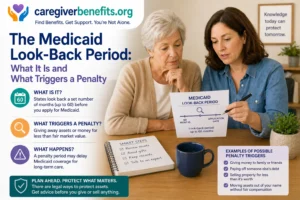
Medicaid may cover home care or adult day services when the care recipient meets rules. Start with Medicaid HCBS waivers explained. If income is an issue, read Medicaid spend-down. If assets or transfers may be an issue, read Medicaid look-back period.
See if a family caregiver can be paid
Some programs allow a care recipient to choose a worker. Rules vary. Start with Can I get paid to be a caregiver? or use the caregiver pay quiz.
Check VA routes
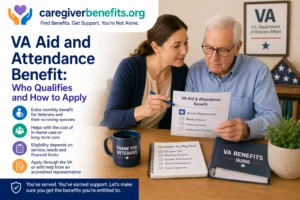
If the person is a Veteran or surviving spouse, ask about VA caregiver support and VA Aid and Attendance. Aid and Attendance is not paid family leave. It may add money to a VA pension for people who qualify and need help with daily activities.
Ask for respite
Respite means short-term relief from caregiving. Illinois has caregiver support and respite routes through aging and disability systems. Start with respite care for caregivers.
Plan for taxes and care cost
If care is paid out of pocket, use the care cost calculator. Save receipts and ask a tax pro about caregiver tax deductions.
Resumen en espanol
Illinois no tiene un programa estatal amplio de permiso familiar pagado para cuidadores. Muchos trabajadores si pueden tener hasta 40 horas de permiso pagado al ano por cualquier razon. Si necesita mas tiempo, pregunte a su trabajo por FMLA, PTO, licencia por enfermedad y reglas locales de Chicago o Cook County.
Si el problema principal es pagar cuidado en casa, llame a Illinois Department on Aging para una persona de 60 anos o mas, o a DHS-DRS Home Services para una persona menor de 60 con discapacidad severa.
FAQ
Does Illinois pay me for weeks while I care for a sick parent?
Not through a broad state paid family leave insurance program. You may be able to use Illinois paid leave, employer PTO, sick leave, or paid leave offered by your job. FMLA may protect unpaid time if you qualify.
Can I use Illinois paid leave to take my parent to the doctor?
Yes, if you are covered and have earned paid leave, the state paid leave law can be used for any reason. Your employer generally cannot require you to give the reason or proof for that protected state paid leave.
Does FMLA pay caregivers in Illinois?
No. FMLA is usually unpaid. It may protect your job and health benefits while you take leave. You may be able to use paid leave, sick leave, or PTO at the same time, depending on the rules.
Can I take FMLA to care for a parent-in-law?
Basic FMLA family care covers a spouse, child, or parent with a serious health condition. A parent-in-law is not covered under that basic rule. Your employer, union contract, or local policy may offer more.
Can Medicaid pay me as a caregiver in Illinois?
Maybe, but not through paid family leave. Some Illinois home care programs may allow the person receiving care to choose a worker, but family worker rules vary by program. Ask the care coordinator, managed care plan, or DHS-DRS whether a family member can be hired.
Who should I call first in Illinois?
For work leave, call your employer or HR first. For state paid leave problems, contact the Illinois Department of Labor Leave Rights Division. For an older adult who needs home care, call the Illinois Department on Aging Senior HelpLine at 1-800-252-8966. For severe disability under 60, ask DHS-DRS about Home Services.
About this guide
This guide was written for family caregivers in Illinois who need a clear first step. It focuses on work leave, pay, home care coverage, and official offices that can confirm rules.
Disclaimer
This is general information, not legal, tax, medical, or financial advice. Rules can change. For legal or tax questions, talk with a qualified professional in your state.
Official sources used
- Illinois Department of Labor: Paid Leave for All Workers Act
- Illinois Department of Labor: Paid Leave for All Workers Act FAQ
- Illinois Department of Labor: Leave Rights General Information
- Illinois Department of Labor: Employee Sick Leave Act FAQs
- Illinois Department of Human Rights: Family Responsibilities Employment Protections
- U.S. Department of Labor: FMLA Information for Family Caregivers
- U.S. Department of Labor: Fact Sheet #28, FMLA
- U.S. Department of Labor: Medical Certification under FMLA
- U.S. Department of Labor Wage and Hour Division: Contact
- Illinois Department on Aging: Senior HelpLine
- Illinois Department on Aging: Community Care Program
- Illinois Department on Aging: Family and Caregiver Resource Centers
- Illinois HFS: Home and Community Based Services Waiver Programs
- Illinois HFS: Persons who are Elderly waiver
- Illinois DHS: Home Services Program
- Illinois DHS: Respite Services
- U.S. Department of Veterans Affairs: Caregiver Support Program
- U.S. Department of Veterans Affairs: Aid and Attendance and Housebound benefits