California caregiver pay guide
Last checked: May 18, 2026
Yes, some family caregivers can be paid in California. The main path is In-Home Supportive Services, called IHSS. It is tied to Medi-Cal and is run by county IHSS offices.
Other paths may help in certain cases. These include California Paid Family Leave, the Home and Community-Based Alternatives Waiver, VA caregiver programs, and Veteran Directed Care. Each program has its own rules.
Rules can change. Counties, managed care plans, waiver agencies, and local offices may use different names. Always confirm with the official California office that handles your case.
Quick answer
A family member may be able to get paid in California if the person who needs care qualifies for IHSS and the county approves care hours. The care receiver usually chooses and supervises the provider.
A spouse, adult child, sibling, relative, friend, or live-in helper may be able to become the paid IHSS provider if they meet provider rules. Some spouse and parent-provider cases are handled under special IHSS funding rules, so ask the county before you assume the answer is no.
Main ways a family caregiver may be paid in California
| Program or route | Who it may help | Where to start |
|---|---|---|
| IHSS | Older adults, blind people, and disabled people who need help to stay safely at home and meet program rules. | County IHSS office. |
| Medi-Cal home and community-based waivers | People who need nursing facility or hospital level care but want care at home or in the community. | For HCBA, contact the assigned HCBA waiver agency for the county or ZIP code. |
| California Paid Family Leave | Workers who lose wages because they take time off to care for a seriously ill family member. | EDD Paid Family Leave through myEDD or a paper claim. |
| VA Aid and Attendance | Some veterans and survivors who already receive VA pension and need help with daily activities. | VA pension benefits office or VA.gov. |
| PCAFC | Some caregivers of eligible veterans with serious care needs. | VA caregiver support team. |
| Veteran Directed Care | Veterans who are enrolled in VA health care, meet clinical need, and have VDC offered through a local VA medical center. | VA social worker or local VA medical center. |
How IHSS works in California
IHSS is the main California program that can pay a family caregiver. IHSS means In-Home Supportive Services.
The program helps eligible aged, blind, and disabled people get help at home instead of moving into out-of-home care. The person who needs care must live in California, have a Medi-Cal eligibility decision, live at home or in a home they choose, and submit the required health care form.
A county social worker reviews the case. The worker looks at what the person can and cannot do safely. The county then sends a notice that says whether IHSS is approved or denied. If approved, the notice says what services and how many hours per month are authorized.
If IHSS is approved, the care receiver must hire someone to do the approved tasks. In many cases, that person can be a family member. The care receiver is treated as the employer for hiring, training, supervising, and ending the provider relationship.
What IHSS may cover
IHSS can cover help with approved in-home tasks. This may include personal care, meal help, cleaning tied to safe care, help getting to medical visits, and other approved services. The county decides the approved tasks and hours after assessment.
Do not start with the question, “How much will I get paid?” Start with, “What tasks and hours can be approved for this person?” Payment follows the approved hours.
Can a spouse, adult child, sibling, or live-in caregiver be paid?
Can a spouse be paid?
Sometimes, yes. California IHSS has special rules for cases where a spouse is the provider. The county may place the case under the IHSS Plus Option or another IHSS funding category.
Do not accept a fast “spouses can never be paid” answer without asking for the exact rule. Ask the county IHSS worker to check spouse-provider rules for the applicant’s age, Medi-Cal status, and approved services.
Can an adult child be paid?
Often, yes, if the parent or other care receiver is approved for IHSS and the adult child completes provider enrollment. The adult child must meet provider rules. This includes county orientation, forms, fingerprints, and a background check.
Can a sibling or other relative be paid?
Often, yes. IHSS allows the care receiver to hire a provider who meets enrollment rules. That provider may be a family member, friend, neighbor, or someone from the Public Authority registry.
Can a live-in caregiver be paid?
Yes, a live-in caregiver may be paid if the person is an approved provider and works approved IHSS hours. Living in the home does not mean every hour is paid. IHSS pays for authorized tasks and approved hours.
Live-in providers may have special tax issues. Ask a tax professional or see caregiver tax deductions for general help.
Important warning
Do not assume care can be paid back to the first day you helped. IHSS payment depends on application dates, county approval, provider enrollment, approved hours, and timesheets. Ask the county what date payment can start in your case.
Other California routes that may help
Home and Community-Based Alternatives Waiver
The Home and Community-Based Alternatives Waiver is often called HCBA. It is for people who need a high level of care and want services at home or in a community setting instead of a nursing facility or hospital setting.
HCBA can include care management and waiver services. It may also connect to Waiver Personal Care Services, called WPCS. DHCS says HCBA had a waiting list as of July 12, 2023, and new applicants should apply with the waiver agency for their area to get on the list.
Start with the assigned HCBA waiver agency for your county or ZIP code. Ask if the person should apply for HCBA, WPCS, or both.
For more background, read Medicaid HCBS Waivers Explained.
Multipurpose Senior Services Program
The Multipurpose Senior Services Program, called MSSP, helps some older adults stay at home through care management and links to services. It is not usually the direct way to pay a family caregiver.
Still, MSSP can matter because many MSSP participants also receive IHSS. If the person is age 60 or older and at risk of nursing facility care, ask the local MSSP provider or Area Agency on Aging if MSSP can help with care planning, services, or gaps IHSS does not cover.
California Paid Family Leave
California Paid Family Leave, called PFL, is not the same as being hired as a caregiver. It is short-term wage replacement for eligible workers who need time off work to care for a seriously ill family member.
EDD says eligible workers may receive up to 8 weeks of PFL benefits in a 12-month period. EDD also says PFL pays benefits but does not, by itself, protect your job. Job protection may come from other laws, such as FMLA or the California Family Rights Act.
For a care claim, the care receiver must be under a doctor or practitioner. The doctor or practitioner must certify the need for care, and the care receiver must sign the needed part of the claim.
Area Agency on Aging and family caregiver services
California Area Agencies on Aging may help family caregivers find respite, training, and local support. These services usually do not work like a paycheck for the caregiver.
They can still help if you are waiting for IHSS, need a break, or need local help. See respite care for caregivers and caregiver checklists.
What about Structured Family Caregiving or adult family care?
California does not appear to use a broad Medicaid Structured Family Caregiving program as the main route for older adults who want to pay a family member at home. In California, IHSS is usually the first route to check.
California does have a Family Home Agency model through the Department of Developmental Services. That model is for certain adults with developmental disabilities through regional centers. It is not the normal path for an adult child caring for an older parent at home.
What if the person is a veteran?
If the person needing care is a veteran, check VA routes in addition to California programs. VA benefits can be separate from IHSS and Medi-Cal.
VA Aid and Attendance
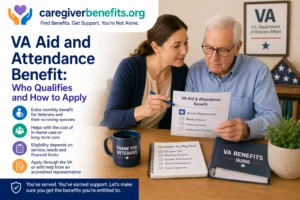
VA Aid and Attendance is an added payment for some veterans and survivors who receive VA pension and need help with daily activities, are in a nursing home due to loss of mental or physical ability, have limited eyesight, or meet other VA rules.
This benefit is paid to the veteran or survivor, not directly as wages to the family caregiver. But the money may help pay for care. Start with VA Form 21-2680 or ask a VA-accredited representative for help.
See VA Aid and Attendance for more help.
PCAFC
PCAFC is a VA family caregiver program. A primary family caregiver may receive a monthly stipend if the veteran and caregiver meet VA rules.
VA rules include requirements for the caregiver and the veteran. For example, VA says the caregiver must be at least 18. The veteran must meet care-need and VA health care rules. Ask the local VA caregiver support team to screen the case.
Veteran Directed Care
Veteran Directed Care, called VDC, lets some veterans manage a flexible service budget and hire workers. Those workers may include family, friends, or neighbors.
VDC is only offered through some VA medical centers. Ask the veteran’s VA social worker, primary care team, or caregiver support team if VDC is offered locally.
How to apply step by step
Step 1: Apply for Medi-Cal or confirm Medi-Cal status
IHSS requires a Medi-Cal eligibility decision. If Medi-Cal is not active, apply online through BenefitsCal, by phone with the county, by mail, or in person at a county office.
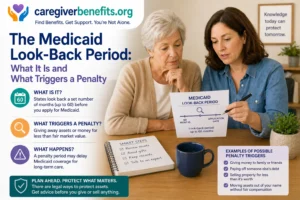
If income is the problem, ask the county to explain any share of cost. You can also read Medicaid spend-down and Medicaid look-back period for general background. California rules can differ, so confirm with the county.
Step 2: Apply for IHSS through the county
Use the county IHSS office for the county where the care receiver lives. Ask for an IHSS application. Some counties accept phone, online, mail, fax, or in-person applications.
Step 3: Ask the doctor about the health care form
The county needs the IHSS Health Care Certification form before services can be authorized. Ask the doctor, nurse practitioner, or other allowed health care professional to explain why the person needs help at home.
Step 4: Prepare for the county assessment
The social worker will ask what the person can do safely. Be specific. Say what happens on bad days. Explain falls, confusion, missed medicine, bathing problems, transfer problems, toileting needs, meal help, and unsafe time alone.
You can estimate costs and care gaps with the care cost calculator.
Step 5: Enroll the family caregiver as the provider
The provider must complete county provider steps before payment. These steps include orientation, provider forms, fingerprints, and a background check. Ask the county IHSS office or Public Authority how to start.
Step 6: Read the Notice of Action
The county should send a notice. Keep it. It should say if IHSS is approved or denied, the approved services, the hours, and appeal rights.
What to ask on the phone
Use plain words. The goal is to get to the right office and start the case.
Call script for county IHSS
“Hi, I am helping my family member apply for IHSS. They live in this county and need help at home with daily care. Can you tell me how to apply, how to get the Health Care Certification form, and how a family member can enroll as the provider if IHSS is approved?”
If the person may need waiver care
“My family member may need nursing facility level care but wants to stay at home. Should we apply for the HCBA waiver or Waiver Personal Care Services? Which waiver agency covers our ZIP code?”
If the person is a veteran
“I care for a veteran who needs help with daily activities. Can a VA social worker screen them for Aid and Attendance, PCAFC, and Veteran Directed Care? Is Veteran Directed Care offered through this VA medical center?”
For more scripts, see caregiver phone scripts.
Documents to gather
- Care receiver’s full name, date of birth, address, phone number, and Social Security number if available.
- Medi-Cal card, Benefits Identification Card, or Medi-Cal notices.
- Medicare card, private insurance card, or managed care plan card if any.
- Doctor names, clinic names, medicine list, diagnoses, and recent hospital or rehab discharge papers.
- List of daily care needs, with examples of unsafe tasks.
- Fall notes, dementia notes, wound care notes, oxygen needs, transfer needs, toileting needs, or other safety records.
- For PFL, wage and employer information, plus medical certification from the care receiver’s doctor or practitioner.
- For VA routes, DD214 if available, VA pension or disability notices, VA health care enrollment details, and doctor notes about daily care needs.
- For provider enrollment, government ID, forms required by the county, fingerprint instructions, and direct deposit information if requested.
Common denial or delay reasons
- The person does not have a Medi-Cal eligibility decision yet.
- The Health Care Certification form is missing or not clear.
- The county does not have the right address or cannot reach the applicant.
- The assessment did not include all care tasks or safety risks.
- The provider has not completed orientation, forms, fingerprints, or background check.
- The requested care is not an IHSS task or is not tied to a need the county approved.
- The HCBA waiver has a waitlist or the application is incomplete.
- The PFL claim is missing the care receiver’s signature or medical certification.
If you are told no
Ask for the denial or change in writing. In California public benefit cases, the written notice is often called a Notice of Action. Keep the envelope too.
If IHSS is denied, reduced, or the hours look too low, ask the county worker for a conference and also watch the appeal deadline. IHSS hearing rights say you usually have 90 days from the day after the county gave or mailed the notice to ask for a hearing.
If services are being cut, ask about aid paid pending. This means services may continue while the hearing is pending if you ask before the action takes place and meet the rule.
You can request a State Hearing online, by phone, or in writing through the California Department of Social Services State Hearings Division. If you need language help, ask for it.
When you appeal, focus on facts. List the care tasks, why they are needed, what happens without help, and what the county missed.
Resumen en espanol
En California, IHSS es el primer programa que muchas familias deben revisar si quieren que un familiar sea pagado por cuidar a alguien en casa. La persona que necesita cuidado debe cumplir las reglas de IHSS y Medi-Cal.
Llame a la oficina de IHSS del condado. Pida la solicitud, el formulario medico de IHSS y las instrucciones para que un familiar sea proveedor. Si le dicen que no, pida la decision por escrito y pregunte por sus derechos de audiencia.
FAQ
Is IHSS the same as Medi-Cal?
No. Medi-Cal is California’s Medicaid program. IHSS is a California in-home care program tied to Medi-Cal eligibility rules. Many people need Medi-Cal checked before IHSS can be approved.
Can I be paid for care I already gave?
Do not count on it. Payment depends on application dates, approval dates, provider enrollment, authorized hours, and timesheets. Ask the county what date payment can start.
Can I get paid if I live with the person?
Maybe. Living with the person does not block payment by itself. But IHSS only pays for approved tasks and approved hours. Ask about live-in provider rules and tax issues.
Can I get IHSS and California Paid Family Leave at the same time?
They are different programs. IHSS pays an approved provider for approved care hours. PFL replaces part of lost wages for an eligible worker who takes time off to care for a seriously ill family member. Ask EDD and IHSS how income or work hours should be reported.
Does Medicare pay me to care for my parent?
Usually no. Medicare may cover some home health care ordered by a doctor, but it is not usually a family caregiver paycheck program. Check IHSS, Medi-Cal waivers, PFL, and VA routes instead.
What if my loved one has dementia?
Tell the county about supervision needs, wandering, unsafe stove use, falls, medicine mistakes, and confusion. Use real examples. The county decides whether those needs fit IHSS rules.
Where should I start if I am overwhelmed?
Call the county IHSS office first if the person needs help at home and may qualify for Medi-Cal. If the person is a veteran, also call the VA caregiver support team or ask the VA primary care social worker.
About this guide
This guide is written for family caregivers in California who need real payment paths, not general caregiving tips. It focuses on official programs, first calls, documents, and what to do when the first answer is no.
Official sources used
- California Department of Social Services: In-Home Supportive Services
- California Department of Social Services: County IHSS Offices
- California Department of Social Services: IHSS Provider Orientation
- California Department of Social Services: IHSS Forms
- California Department of Social Services: IHSS Paraphrased Regulations
- California Department of Health Care Services: Apply for Medi-Cal
- California Department of Health Care Services: 1915(c) Home and Community-Based Services Waivers
- California Department of Health Care Services: HCBA Waiver
- California Department of Aging: Multipurpose Senior Services Program
- California Department of Aging: Family Caregiver Services
- California Employment Development Department: Paid Family Leave
- California Employment Development Department: Paid Family Leave Care Claim Documents
- U.S. Department of Veterans Affairs: Aid and Attendance and Housebound Benefits
- U.S. Department of Veterans Affairs: Family and Caregiver Benefits
- U.S. Department of Veterans Affairs: Veteran Directed Care
- Administration for Community Living: Veteran Directed Care
- California Department of Developmental Services: Family Home Agency
- California Department of Social Services: Hearing Requests
Disclaimer
This is general information, not legal, tax, medical, or financial advice. Rules can change. For legal or tax questions, talk with a qualified professional in your state. For program decisions, confirm with the county, state agency, VA, EDD, or official office that handles your case.