North Carolina caregiver pay guide
Last checked: May 18, 2026
Yes, a family caregiver may be paid in North Carolina in some cases. The main paths are NC Medicaid CAP/DA, CAP/DA consumer-directed services, CAP/DA coordinated caregiving for some live-in caregivers, Home Care Independence in some counties, and some VA programs.
Not every caregiver can be paid. The person needing care must qualify for the program. The paid caregiver must also meet program rules, training, paperwork, and background checks.
Quick answer
A family member may be paid to care for someone in North Carolina, but usually only through a specific program. The strongest Medicaid route to check is CAP/DA. CAP/DA is for adults who need a nursing-home level of care but can stay at home with supports.
CAP/DA has a consumer-directed option that can let the person receiving care hire a worker. NC Medicaid policy also says a spouse, parent, step-parent, child, sibling, or other relative can be hired for some CAP/DA services when the person receiving care is age 18 or older and the worker meets the rules.
For older adults without Medicaid, Home Care Independence may help in some counties. For veterans, VA Aid and Attendance, PCAFC, and Veteran Directed Care may help, depending on VA rules and local access.
Start here
- Call the person’s county Department of Social Services. Ask about long-term care Medicaid, in-home services, and CAP/DA.
- Ask the county CAP/DA case management entity how to make a CAP/DA referral. Ask if consumer direction or coordinated caregiving could fit.
- If the person is age 60 or older, also contact the local Area Agency on Aging or Home Care Independence provider. Ask about non-Medicaid help.
If the person is a veteran, call the VA medical center social worker or caregiver support team before you apply for Medicaid-only help.
North Carolina warning
Rules can change. Counties, managed care plans, waiver case management entities, local providers, and agencies may use different names for the same help.
Always confirm the current rule with NC Medicaid, your county DSS office, the CAP/DA case management entity, or the VA before you make work or money plans.
Main programs and where to start
| Program or route | Who it may help | Can a family caregiver be paid? | Where to start |
|---|---|---|---|
| NC Medicaid CAP/DA | Adults age 18 or older who need a nursing-home level of care and can be safe at home with services. | Sometimes. CAP/DA has provider-led, consumer-directed, and coordinated caregiving options. | NC Medicaid CAP/DA and the local CAP/DA case management entity. |
| CAP/DA consumer-directed services | People on CAP/DA who can direct their own care, or have a representative who can do it. | Often possible if the worker meets the rules. A representative or legal decision-maker may have limits. | Ask the CAP/DA case manager for “consumer direction” and “personal assistance.” |
| CAP/DA coordinated caregiving | Some CAP/DA members who need a live-in caregiver and a care plan. | Yes, if approved. NC Medicaid policy says the live-in caregiver is paid a stipend through the service rules. | Ask the CAP/DA case manager if “coordinated caregiving” fits the person’s care plan. |
| NC Medicaid Personal Care Services | People who need help with daily tasks such as bathing, dressing, eating, toileting, or moving around. | Usually not a direct family-hire route. PCS is provided by trained helpers through licensed agencies or certain care settings. | NC Medicaid PCS or the person’s Medicaid plan. |
| Home Care Independence | People age 60 or older who live at home and need help with personal care or home tasks. | Yes, in some areas. NC DHHS says it lets an older adult hire family, friends, or others as a caregiver or personal assistant. | NC DHHS Home Care Independence or local provider directory. |
| Family Caregiver Support Program | Unpaid caregivers helping older adults or people with Alzheimer’s disease and related disorders. | No ongoing caregiver wage. It may help with information, access help, support, training, short-term respite, and limited extra services. | NC DHHS Family Caregiver Support Program. |
| VA Aid and Attendance | Some veterans and survivors who get VA pension and need help with daily activities or are housebound. | It pays the veteran or survivor, not the caregiver directly. The household may use the added money for care costs. | VA Aid and Attendance. |
| VA PCAFC | Some veterans with a VA disability rating of 70% or higher who need in-person personal care for at least 6 months. | Yes, for approved Primary Family Caregivers. VA rules are strict. | VA caregiver benefits page. |
| Veteran Directed Care | Some veterans enrolled in VA health care who need long-term services and supports and have local VDC access. | Often yes. The veteran may be able to hire family, friends, or neighbors. | VA Veteran Directed Care or the VA social worker. |
NC Medicaid CAP/DA is the main Medicaid route to check first
CAP/DA means Community Alternatives Program for Disabled Adults. It is a North Carolina Medicaid home and community-based services waiver. A waiver is a Medicaid program that can pay for services at home or in the community instead of a nursing home.
CAP/DA is for adults age 18 or older with serious health needs. The person must meet a level of care like nursing facility care. They must also need at least one CAP/DA service.
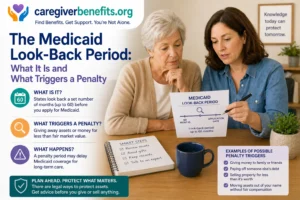
NC Medicaid says CAP/DA members must be enrolled in NC Medicaid Direct. Some people may have a Medicaid deductible or spend-down. If income or assets are the problem, read our guides on Medicaid spend-down and the Medicaid look-back period.
CAP/DA services that may matter to caregivers
CAP/DA can include in-home aide services, personal assistance, respite, meal delivery, home changes, personal emergency response systems, supplies, case management, financial management, consumer-directed services, and coordinated caregiving.
For a broader plain-English guide to waivers, see Medicaid HCBS waivers explained.
CAP/DA has more than one service model
- Provider-led: an agency provides the aide or home care worker.
- Consumer-directed: the person receiving care, or a representative, acts as the employer of record and hires workers.
- Coordinated caregiving: a live-in caregiver provides care with support from a health care agency and a care plan.
Ask about the exact model. A family member who can be paid under one model may not fit another model.
CAP/DA consumer-directed services
Consumer direction means the person receiving care has more choice and control over who provides care. In CAP/DA, the person or their representative may recruit, hire, train, supervise, and dismiss the personal assistant.
NC Medicaid policy says a family member can be hired in some CAP/DA service situations. This can include a spouse, parent, step-parent, child, sibling, or other relative when the person getting CAP/DA is age 18 or older and the worker meets the rules.
The worker may need to be at least 18, meet skill or competency rules, pass background and registry checks, and keep other jobs from getting in the way of the approved care plan.
The person directing care cannot always be the paid worker. NC DHHS says a person who directs the care, or is involved in the decision-making for the care recipient, cannot also be the person paid to provide care under its listed self-directed programs. CAP/DA policy also has limits for representatives, guardians, powers of attorney, and legally responsible people, unless special rules apply.
CAP/DA coordinated caregiving and live-in caregiver pay
North Carolina does not appear to use the public name “Structured Family Caregiving” for its main adult Medicaid caregiver-pay route. The similar CAP/DA service to ask about is called coordinated caregiving.
Coordinated caregiving is for some CAP/DA members. The caregiver lives in the same home as the waiver participant, or the participant lives in the caregiver’s home. The service is meant to help the person stay in the community and avoid a facility when safe.
NC Medicaid policy says the live-in caregiver is paid a stipend for oversight and supervision needed to keep the person in the community. The policy also says the caregiver must meet rules such as being at least 18, being in good health, following instructions, and passing criminal and registry checks.
This is not automatic. It must fit the assessment and the care plan. Ask the CAP/DA case manager this exact question: “Could coordinated caregiving be considered for a live-in family caregiver?”
NC Medicaid Personal Care Services may help, but it is not usually a direct family-pay route
Personal Care Services, or PCS, helps people with daily tasks. These tasks can include eating, dressing, bathing, toileting, and moving around.
NC Medicaid says PCS is provided by trained helpers who work for licensed home care agencies or adult care homes. That means PCS may help your loved one get hands-on care, but it is not the same as consumer direction.
If your goal is to be paid as the family caregiver, ask about CAP/DA consumer direction, CAP/DA coordinated caregiving, and Home Care Independence. Still ask about PCS if the person needs hands-on help now.
Home Care Independence may help some older adults
Home Care Independence is a North Carolina Division of Aging program. It can let an older adult hire family, friends, or others as a caregiver or personal assistant.
The person must usually be age 60 or older, live at home, and need help with daily living or home tasks. The person must be able to direct their own care or have someone who can do that for them.
This program is not in every county. It also may not provide enough help for someone who needs ongoing nursing care, supervision, or monitoring.
Important rule: the person who directs the care cannot also be the paid caregiver. Ask the provider how this rule works before you plan on payment.
Family Caregiver Support Program helps caregivers, but does not pay ongoing wages
The Family Caregiver Support Program can help unpaid caregivers with information, help finding services, counseling, support groups, training, short-term respite, and limited extra services.
NC DHHS says this program does not pay caregivers to provide ongoing care for loved ones. It can still be worth calling if you need respite, local names, or help finding a program.
For more help with breaks, read respite care for caregivers.
Can a spouse be paid?
Sometimes, under CAP/DA. NC Medicaid policy says a spouse can be hired as an employee for some CAP/DA services when the person receiving CAP/DA is age 18 or older and the spouse meets the service rules.
But there are limits. If the spouse is also the person who directs the care, acts as representative, guardian, power of attorney, or health care power of attorney, the rules may block payment unless a special rule applies.
Do not assume approval. Ask the CAP/DA case manager or financial manager these questions:
- Can a spouse be hired for this service?
- Is the spouse also listed as the representative, guardian, or power of attorney?
- Would that role stop payment?
- Does this need an exception or a different service model?
Can an adult child be paid?
Yes, an adult child may be able to be paid through CAP/DA if the program approves the service and the adult child meets worker rules. The same may be true for a sibling or another relative.
Under CAP/DA, the worker may need to be at least 18, pass checks, meet skill rules, and follow the approved care plan. The person receiving care must qualify for CAP/DA first.
An adult child may also be paid through Home Care Independence in counties where the program is offered. The adult child cannot be the person who directs the care if that rule applies.
Start with the bigger guide here: Can I get paid to be a caregiver? You can also use the caregiver pay quiz to sort the likely path.
What about a sibling, other relative, or live-in caregiver?
A sibling or other relative may be paid under some CAP/DA service rules if they meet the worker rules and the service is approved. The same is true for some live-in caregivers.
NC Medicaid policy defines a paid live-in caregiver as someone who lives in the same household as the waiver participant and is hired and paid by an in-home aide agency, home health agency, or through consumer direction to help with daily living tasks.
Paid live-in status may need proof of the shared address. Ask what documents the agency or financial manager needs.
What if the person is a veteran?
Check VA routes before you stop at Medicaid. The VA has several paths that may help a family caregiver.
VA Aid and Attendance
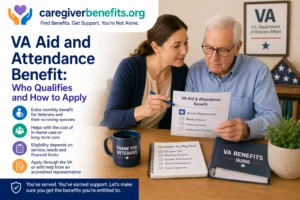
VA Aid and Attendance can add money to a VA pension for a qualified veteran or survivor who needs help with daily activities or is housebound. It does not pay the caregiver directly. The payment goes to the veteran or survivor.
The VA usually needs medical information. VA Form 21-2680 is the Aid and Attendance medical exam form.
PCAFC
PCAFC is the VA family caregiver stipend program. The caregiver must be at least 18. The veteran must meet VA rules, including VA health care enrollment, a VA disability rating of 70% or higher, and a need for at least 6 months of in-person personal care services.
Only an approved Primary Family Caregiver gets the monthly stipend. Secondary caregivers may get some supports, but not the stipend.
Veteran Directed Care
Veteran Directed Care, or VDC, can let some veterans manage a service budget and hire workers. Those workers may include family members, friends, or neighbors. It must be offered through the local VA medical center or partner agency.
What to say to the VA
“I care for a veteran at home. They need help with bathing, dressing, meals, safety, and daily care. Can we speak with a VA social worker or caregiver support team about Aid and Attendance, PCAFC, and Veteran Directed Care?”
For more detail, see VA Aid and Attendance.
How to apply step by step
Step 1: Write down the care needs
Make a simple list of what the person cannot do safely alone. Use plain words.
- Bathing
- Dressing
- Eating
- Toileting
- Moving from bed to chair
- Taking medicine safely
- Meal prep
- Falls, wandering, confusion, or unsafe behavior
Daily tasks are often called activities of daily living, or ADLs. Home tasks such as meals, shopping, and laundry are often called instrumental activities of daily living, or IADLs.
Step 2: Check Medicaid status
If the person does not have Medicaid, apply through NC Medicaid, ePASS, or the county DSS office.
NC Medicaid says you can apply online, in person, by phone, or by mail, email, fax, or drop off at local DSS. If you are not sure the person qualifies, apply anyway and let DSS decide.
Step 3: Ask for long-term care and in-home service screening
Do not only say, “I need help.” Use the program words.
Ask for “long-term care Medicaid,” “in-home services,” “CAP/DA,” “Personal Care Services,” and “waiver screening.”
Step 4: Ask about CAP/DA referral
CAP/DA referrals go through the local CAP/DA case management entity in the person’s county. NC Medicaid also lists NC LIFTSS as a referral contact for qualified case management entities and providers.
Ask the county DSS office or NC Medicaid Contact Center for the correct CAP/DA case management entity for the person’s county.
Step 5: Ask about the family caregiver pay model
Once CAP/DA is being discussed, ask which service model fits:
- provider-led services
- consumer-directed personal assistance
- coordinated caregiving for a live-in caregiver
- paid live-in caregiver rules
Step 6: If the person is 60 or older, call aging services too
Contact the local Area Agency on Aging or Home Care Independence provider. Ask if Home Care Independence is offered in the county.
Step 7: If the person is a veteran, call the VA
Ask for a VA social worker or caregiver support team. Ask about Aid and Attendance, PCAFC, and Veteran Directed Care.
What to ask on the phone
Use this script when calling DSS, NC Medicaid, a CAP/DA case management entity, or an aging office.
“I am caring for a family member at home in North Carolina. They need help with bathing, dressing, toileting, meals, safety, and moving around. I need to know if they may qualify for Medicaid long-term care, CAP/DA, Personal Care Services, consumer direction, coordinated caregiving, or Home Care Independence. I also need to know if a spouse, adult child, sibling, or live-in caregiver can be paid under the program.”
Questions to ask
- Which office handles CAP/DA referrals for this county?
- Does the person need NC Medicaid Direct for CAP/DA?
- Is there a waitlist or waiver slot issue?
- Can a family member be hired under consumer direction?
- Can a spouse be hired in this case?
- Can an adult child or sibling be hired?
- Would being power of attorney or representative stop the person from being paid?
- Could coordinated caregiving fit a live-in caregiver?
- What forms are needed next?
- What denial or appeal rights will be mailed if the answer is no?
For more scripts, use caregiver phone scripts.
Documents to gather
Gather copies if you have them. Do not delay an application for weeks just because one paper is missing.
- Full legal name, date of birth, and Social Security number for the person needing care
- North Carolina address proof, such as lease, bill, ID, or other proof
- Medicaid card or health plan card, if any
- Medicare card, if any
- Doctor names, clinic names, and phone numbers
- Diagnosis list and medicine list
- Hospital, rehab, home health, or nursing facility records
- Proof of income, such as Social Security, pension, wages, or VA pay
- Bank statements and asset records if applying for long-term care Medicaid
- Power of attorney, health care power of attorney, guardianship papers, or representative papers
- Daily care log showing the help needed each day
- Fall reports, wandering notes, confusion notes, or safety concerns
- For a live-in caregiver, proof that the caregiver and person receiving care live at the same address, if asked
- For VA Aid and Attendance, medical exam paperwork such as VA Form 21-2680
Use caregiver checklists to keep these papers in one place.
Common reasons for delay or denial
- The person does not yet have the right Medicaid category.
- The person is not in NC Medicaid Direct, which CAP/DA requires.
- The assessment does not show a nursing-home level of care.
- The file does not show enough help with ADLs or safety needs.
- The person needs services, but not a CAP/DA waiver slot.
- The family caregiver is also the representative, guardian, or decision-maker and the rule blocks payment.
- The worker has not passed background or registry checks.
- The county does not have a Home Care Independence provider.
- A doctor, agency, or plan did not send records.
- The request used the wrong program name.
If you are told no
Ask for the reason in writing. A phone answer is not enough when Medicaid services are denied, reduced, stopped, or delayed.
If you get a written denial, read the appeal deadline right away. The notice should tell you how to appeal. If services are being cut, ask whether you must appeal quickly to keep services during the appeal.
What to say
“Please send the denial or decision notice in writing. Please tell me the appeal deadline, what rule was used, what records were missing, and who can help me file the appeal.”
Who may help
- The county DSS caseworker listed on the notice
- The Medicaid health plan, if the person has one
- The CAP/DA case manager or case management entity
- The NC Medicaid Ombudsman if the person has Medicaid and cannot solve the issue with the plan or provider
- Legal Aid of North Carolina or another qualified legal help source if the issue is serious
Do not give up after one phone call. Ask for the exact program rule and the next step.
Other money and work issues to check
Caregiver pay may affect taxes, benefits, Medicaid eligibility, and household income. Keep pay records, timesheets, and tax forms.
Do not count on a state paid leave check as the caregiver-pay route. Some workers may have unpaid job-protected leave under FMLA or paid leave through an employer. Ask your employer before you quit or cut hours.
Use these next if money is tight:
Resumen en español
En Carolina del Norte, un familiar puede recibir pago por cuidar a una persona en algunos casos. Las rutas principales son Medicaid CAP/DA, servicios dirigidos por el consumidor, cuidado coordinado para algunos cuidadores que viven en la casa, Home Care Independence en algunos condados, y algunos programas del VA.
Llame al DSS del condado y pregunte por “long-term care Medicaid,” “CAP/DA,” “consumer direction,” y “coordinated caregiving.” Si la persona es veterana, llame al VA y pregunte por Aid and Attendance, PCAFC, y Veteran Directed Care.
FAQ
Can I get paid by the state of North Carolina to care for my mother?
Maybe. If she qualifies for CAP/DA, Home Care Independence, or a VA program, family caregiver pay may be possible. If she does not qualify for one of those programs, the state usually will not pay you just because you provide care.
Does North Carolina Medicaid pay family caregivers?
Sometimes. CAP/DA can allow family caregivers to be hired under certain service rules. The person receiving care must qualify, and the caregiver must meet worker rules.
Can I be paid if I live with the person?
Sometimes. CAP/DA has rules for paid live-in caregivers and coordinated caregiving. You may need to prove that you live at the same address and meet service rules.
Can a power of attorney be paid as caregiver?
It depends. CAP/DA has limits for a legal guardian, power of attorney, health care power of attorney, representative, or legally responsible person. Some special or extraordinary situations may apply. Ask the CAP/DA case manager before you assume payment is allowed.
Does Personal Care Services let me hire my own family caregiver?
PCS is usually provided through licensed agencies or certain care settings. It may help the person get care, but it is not usually the same as hiring a family member directly.
Is Home Care Independence in every North Carolina county?
No. NC DHHS says the service is not provided in every county. Check the provider directory or your Area Agency on Aging.
What if my loved one was denied Medicaid?
Ask for the written notice, read the appeal deadline, and call the DSS caseworker listed on the notice. You can also ask the NC Medicaid Ombudsman or a legal help group if the issue cannot be solved.
Official sources used
- NC Medicaid: Community Alternatives Program for Disabled Adults (CAP/DA)
- NC Medicaid provider page: CAP/DA
- NC Medicaid Clinical Coverage Policy 3K-2: CAP/DA
- NC Medicaid CAP/DA fact sheet
- NC Medicaid: Personal Care Services
- NC DHHS: Home Care Independence
- NC DHHS: Family Caregiver Support Program
- NC DHHS: Area Agencies on Aging
- NC Medicaid: How to apply
- NC DHHS: Local DSS Directory
- NC Medicaid Ombudsman
- VA: Aid and Attendance benefits and Housebound allowance
- VA Caregiver Support Program benefits page
- VA: Veteran Directed Care
- Administration for Community Living: Veteran Directed Care
About this guide
This guide is based on official North Carolina and federal sources checked on the date listed above. Program rules, forms, phone numbers, and local processes can change.
This is general information, not legal, tax, medical, or financial advice. For legal or tax questions, talk with a qualified professional in your state.