Pennsylvania caregiver leave and pay guide
Last checked: May 18, 2026
If you need time off work to care for a parent, spouse, child, or other loved one in Pennsylvania, start with the plain answer: Pennsylvania does not have a broad state paid family leave program for family caregivers.
That does not mean you are out of options. You may have unpaid job-protected leave under the federal Family and Medical Leave Act, paid time through your employer, local paid sick leave, Medicaid home care pay routes, VA caregiver help, or respite through Pennsylvania aging services.
Quick answer
Pennsylvania does not currently offer a broad state paid family leave program that pays workers to take time off to care for a family member. Eligible workers may still have unpaid job protection under the federal FMLA. Pay may come from employer benefits, local paid sick leave, Medicaid home care programs, VA caregiver programs, or Pennsylvania aging programs, depending on the facts.
Start here
- Ask your employer or HR for FMLA and paid leave options. Say that you need time off to care for a family member with a serious health condition.
- If the person needs help at home, call the right Pennsylvania aging or Medicaid contact. For an older adult, start with the local Area Agency on Aging. For Medicaid long-term care, ask about Community HealthChoices and the Independent Enrollment Broker.
- If the person is a veteran, contact VA caregiver support. Ask about the VA family caregiver program (PCAFC) and Aid and Attendance.
Main programs and routes
| Route | Who it may help | Where to start |
|---|---|---|
| Pennsylvania statewide paid family leave | There is no broad state program to apply for at this time. | Check your employer, union, city or county rules, and official state updates. |
| Federal FMLA | Eligible workers who need job-protected time off to care for a spouse, parent, or child with a serious health condition. | Ask HR or your leave office for FMLA rights, forms, and deadlines. |
| Employer paid leave, PTO, or sick leave | Workers whose employer offers paid leave that can be used for family care. | Ask HR for the written leave policy and whether paid leave can run with FMLA. |
| Philadelphia, Pittsburgh, or Allegheny County paid sick leave | Some workers in these areas may have paid sick time that can be used for a family member’s illness or care. | Check the city or county paid sick leave page and ask HR how to request it. |
| Pennsylvania Community HealthChoices | Some adults age 21 or older who have Medicaid long-term services and supports, or who have both Medicare and Medicaid. | Ask the Independent Enrollment Broker about long-term services and supports. Ask about participant direction. |
| Pennsylvania Caregiver Support Program | Some unpaid primary caregivers in Pennsylvania. It may help with respite and approved caregiving costs. | Contact the local Area Agency on Aging. |
| OPTIONS Program | Pennsylvania residents age 60 or older with unmet needs that affect daily life. | Contact the local Area Agency on Aging and ask for an OPTIONS assessment. |
| VA caregiver benefits and Aid and Attendance | Some veterans and caregivers. | Contact VA caregiver support or ask about VA Aid and Attendance. |
Does Pennsylvania have paid family leave for caregivers?
No. Pennsylvania does not have a broad statewide paid family leave program for workers who need time off to care for a family member.
The Pennsylvania Department of Aging says paid leave for this purpose is not required under state law in Pennsylvania, though some employers may offer it. That means most Pennsylvania workers must check other routes.
A paid family and medical leave bill may be discussed or pending in the Pennsylvania General Assembly. A bill is not the same as an active benefit. Do not plan your care budget around a proposed program unless Pennsylvania creates an official application process.
Important Pennsylvania warning: Rules can change. Counties, managed care plans, waiver contractors, city offices, and agencies may use different names for similar services. Always confirm details with an official Pennsylvania source, your employer, or the plan that handles the person’s services.
Who qualifies
Because Pennsylvania does not have a broad paid family leave program, there is no single state list of covered family members, pay rules, or forms for paid family leave. The answer depends on the route you use.
For FMLA
FMLA is a federal law. It can give eligible workers unpaid, job-protected leave. For family caregiving, FMLA usually covers care for a spouse, parent, or child with a serious health condition. It can also cover some military family and military caregiver situations.
In general, you must work for a covered employer. You also must have worked for that employer for at least 12 months, have at least 1,250 hours of service in the 12 months before leave starts, and work at a site where the employer has at least 50 employees within 75 miles.
FMLA does not cover every family relationship. It may not cover a sibling, grandparent, aunt, uncle, cousin, in-law, or friend unless another FMLA rule applies. Ask HR or the U.S. Department of Labor if your family relationship is not clear.
For employer paid leave
Some employers offer paid sick leave, paid time off, family leave, caregiver leave, or union leave. The employer policy controls who counts as family, how much time is paid, and what forms you need.
Ask for the written policy. Do not rely only on a quick phone answer.
For local paid sick leave
Some local Pennsylvania rules may help with short absences. Philadelphia has paid sick leave rules. Pittsburgh has a Paid Sick Days Act. Allegheny County also has a paid sick leave ordinance for some employers.
These rules are not the same as a statewide paid family leave program. They may help for short doctor visits, urgent illness, or short-term care needs. Local rules can have employer-size rules, covered worker rules, accrual limits, and notice rules. Check the city or county page before you count on the time.
For Medicaid home care pay
Medicaid home care pay is not paid family leave from work. It may pay an approved worker for approved care tasks in an approved care plan.
In Pennsylvania, the main long-term care system for many adults is Community HealthChoices. It serves people age 21 or older who are eligible for both Medicare and Medicaid, or who receive Medicaid long-term services and supports because they need help with daily personal tasks.
Pennsylvania also has participant-directed services. In participant direction, the person receiving services may be able to employ a personal attendant instead of using an agency worker. Pennsylvania self-directed service material says a participant may hire a friend, neighbor, or other trusted person, and an agency helps issue paychecks and file taxes. Ask the service coordinator or plan whether your exact family relationship can be paid.
For Pennsylvania aging programs
The Pennsylvania Caregiver Support Program may help some unpaid primary caregivers with respite, support, and reimbursement for approved caregiving costs and supplies. It is handled by the local Area Agency on Aging.
The OPTIONS Program may help Pennsylvania residents age 60 or older who want to stay at home and have unmet needs that affect daily life. It can include adult day services, care management, meals, personal care, and other services when available.
For VA benefits
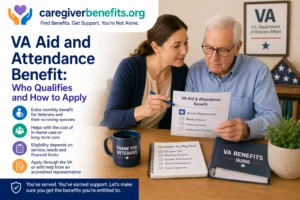
The VA VA family caregiver program (PCAFC) may provide support and a monthly stipend to an approved primary family caregiver of an eligible veteran. VA Aid and Attendance is different. It can add money to a VA pension for some veterans and survivors who need help with daily activities or are housebound.
How much pay and how much time
For a Pennsylvania statewide paid family leave program, the amount is simple: there is no broad program, so there is no state wage replacement amount, no statewide caregiving leave bank, and no Pennsylvania paid family leave form to file.
FMLA time
FMLA can provide up to 12 workweeks of leave in a 12-month period for most covered family and medical reasons. Military caregiver leave can allow up to 26 workweeks in a single 12-month period for care of a covered servicemember with a serious injury or illness.
FMLA is unpaid unless you use employer-provided paid leave at the same time, or your employer has a paid leave policy that applies.
Employer pay
Employer pay depends on the policy. Some workers can use PTO or sick leave for family care. Others can only use sick leave for their own illness. Some union contracts or public employer policies may offer more.
Ask whether the paid time runs at the same time as FMLA. Also ask what happens to health insurance premiums during leave.
Local paid sick time
Local paid sick time is usually shorter than family leave. It may help with a doctor visit, urgent care day, or short caregiving need. Check the current city or county rule for covered workers, covered employers, and the yearly cap.
Medicaid, VA, and aging program help
Medicaid and VA routes are not wage replacement for missed work. They may pay for approved care services or give a benefit tied to the person’s care needs. Pennsylvania aging programs may help with respite or approved cost reimbursement, but they do not replace a full paycheck.
Do not assume a rate. Ask the plan, agency, or VA office what applies to your case.
How to apply
There is no Pennsylvania paid family leave application for caregivers because there is no broad state program. Use the steps below based on what you need.
Step 1: Ask your employer for FMLA and paid leave
Contact HR, your manager, your leave office, or the benefits office. Say you need leave to care for a family member with a serious health condition.
Ask for FMLA forms, paid sick leave rules, PTO rules, caregiver leave rules, and any short-term leave policy. If you belong to a union, ask the union representative too.
Step 2: Ask the doctor for the right certification
If your employer asks for FMLA medical certification, the doctor or other allowed health care provider may need to state that your family member has a serious health condition and needs care. The form does not always need to include a diagnosis.
The U.S. Department of Labor has an optional form called WH-380-F for a family member’s serious health condition. Your employer may use its own form if it asks only for allowed information.
Step 3: If the person needs home care, call Pennsylvania aging or Medicaid contacts
If the person is age 60 or older, call the local Area Agency on Aging. Ask for caregiver support, OPTIONS, respite, and in-home service screening.
If the person may need Medicaid long-term services and supports, ask about Community HealthChoices and the Independent Enrollment Broker. Ask whether participant direction is available and whether the family member can be hired for approved care tasks.
Step 4: If the person is a veteran, call VA caregiver support
Ask about the VA family caregiver program (PCAFC). Also ask whether Aid and Attendance or Housebound benefits may apply if the veteran or survivor receives or may qualify for VA pension.
Step 5: Keep proof of every request
Save copies of forms, emails, letters, doctor notes, plan notices, denial letters, and call notes. Write down the date, time, office name, and person you spoke with.
What to say on the phone
To HR or your leave office:
“I need time off to care for my family member who has a serious health condition. Please send me the FMLA eligibility notice, any medical certification form you need, and the policy for paid sick leave, PTO, or family caregiver leave. I also need to know whether paid leave will run at the same time as FMLA.”
To the Area Agency on Aging:
“I am caring for an older adult in Pennsylvania. I need to ask about the Caregiver Support Program, OPTIONS, respite, and any in-home help. Can you screen us or tell me which office handles the assessment?”
To Community HealthChoices or the Independent Enrollment Broker:
“My family member needs help with daily care at home. I want to ask about Medicaid long-term services and supports, Community HealthChoices, and participant-directed services. Can a family member be hired for approved personal assistance tasks in this case?”
How it works with FMLA
FMLA is often the main job-protection route for Pennsylvania caregivers.
FMLA can protect your job if you meet the worker rules, your employer is covered, and the reason for leave qualifies. It can also protect your group health benefits during leave under the same terms as if you had not taken leave.
FMLA does not have to be paid. But paid leave and FMLA can run at the same time when the reason fits the employer’s paid leave rules. Your employer may also require you to use paid leave during FMLA if the policy allows it.
You do not have to say the exact word “FMLA” the first time. But you must give enough information so your employer knows the leave may be covered. If the need is planned, give notice as early as you can. For planned treatment, federal guidance often expects 30 days of notice when that is possible. If the need is sudden, give notice as soon as you can under the facts.
If your employer asks for medical certification, you usually must get at least 15 calendar days to return it. If the form is incomplete, the employer should tell you what is missing and give time to fix it in most cases.
Tip: Ask HR to put every deadline in writing. A missed form deadline can cause problems even when the care need is real.
If Pennsylvania does not have paid leave
Use more than one route if you need to. Many families need job protection, care help, and cost help at the same time.
Route 1: Protect your job first
Ask about FMLA as soon as you know you need time away from work. If FMLA does not cover you, ask for other unpaid leave, ADA-related leave if it applies to your own health, schedule changes, remote work, shift swaps, or PTO.
If you think your FMLA rights were denied, contact the U.S. Department of Labor Wage and Hour Division or talk with an employment lawyer in Pennsylvania.
Route 2: Check every paid leave policy at work
Ask for sick leave, PTO, personal leave, family illness leave, donated leave, union leave, bereavement-related leave if there is an end-of-life situation, and any caregiver benefit. Do not assume the first policy is the only one.
Route 3: Check local paid sick leave
If you work in Philadelphia, Pittsburgh, or Allegheny County, check the local paid sick leave rule. These laws are not full paid family leave, but they may cover some care for a sick family member.
Route 4: Ask whether Medicaid can pay for home care
If your loved one needs help bathing, dressing, eating, moving around, taking medicines safely, or avoiding a nursing home, ask about Medicaid long-term services and supports.
Start with Medicaid HCBS waivers explained if you need plain-English background. If income or assets are a concern, read Medicaid spend-down and Medicaid look-back period before moving money or signing contracts.
For a broader caregiver pay overview, see Can I get paid to be a caregiver? You can also use the caregiver pay quiz to sort possible routes.
Route 5: Ask about VA benefits
If your loved one served in the military, ask about VA caregiver support. Also ask whether VA Aid and Attendance may help with the cost of care. Start with VA Aid and Attendance for a plain-English overview.
Route 6: Ask for respite and local help
Respite means short-term relief for a caregiver. It may be in-home help, adult day care, or another approved break. Start with your Area Agency on Aging and read respite care for caregivers.
If you are trying to plan the cost of care, use the care cost calculator. For call help, use phone scripts. For paperwork, use caregiver checklists.
Documents to gather
Keep these in one folder if you can:
- Your employer’s FMLA packet and paid leave policy
- Your work schedule, job title, hire date, and hours worked in the past 12 months
- Doctor letters, hospital discharge papers, care instructions, and appointment lists
- Any FMLA certification form from your employer, such as WH-380-F or the employer’s own form
- Proof of family relationship if your employer asks for it
- Medicaid card, Medicare card, insurance cards, and managed care plan notices
- Income and asset records if applying for Medicaid long-term care
- Power of attorney, health care power of attorney, guardianship papers, or written permission to speak with agencies if you have them
- VA discharge papers, VA rating letters, VA pension letters, and doctor records if applying for VA help
- Receipts for caregiving costs if asking about reimbursement through an aging program
- Denial letters, appeal forms, and envelopes with postmark dates
For tax questions about paying a family member or claiming care-related costs, see caregiver tax deductions and talk with a qualified tax professional.
What to do if the first answer is no
A “no” can mean many things. It may mean the person is not eligible. It may also mean you reached the wrong office, used the wrong program name, or did not send the right proof.
- Ask for the reason in writing. Do not rely on “you do not qualify” by phone.
- Ask what rule was used. For work leave, ask which FMLA or employer policy rule applies. For Medicaid, ask which eligibility or service rule applies.
- Ask what is missing. A missing doctor form, unclear care plan, or incomplete financial record can delay a case.
- Ask about appeal rights. Denial letters often have short deadlines. Save the envelope and the date received.
- Try the next route. If paid leave is not available, ask about FMLA. If FMLA does not apply, ask about employer leave. If work leave does not solve the care gap, ask about Medicaid, VA, OPTIONS, caregiver support, or respite.
Common problems to avoid
- Waiting too long to ask HR. Leave forms and doctor forms can take time.
- Assuming paid leave and FMLA are the same. FMLA protects jobs for eligible workers. It does not guarantee pay.
- Calling Medicaid “paid family leave.” Medicaid home care is a care service program. It is not wage replacement for your missed work.
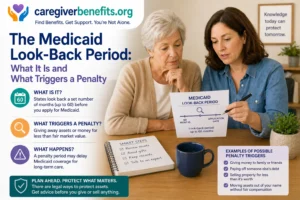
- Moving money before Medicaid advice. Transfers can affect long-term care eligibility. Ask before you act.
- Ignoring local rules. Philadelphia, Pittsburgh, and Allegheny County paid sick leave rules may help some workers with short absences.
Resumen en espanol
Pennsylvania no tiene un programa estatal amplio de licencia familiar pagada para cuidadores. Algunos trabajadores pueden tener licencia sin pago con proteccion de empleo bajo FMLA.
Tambien revise beneficios de su empleador, licencia por enfermedad local, Medicaid, programas para veteranos, la agencia local sobre envejecimiento, y ayuda de respiro. Pida las reglas por escrito y guarde copias de todos los formularios.
FAQ
Does Pennsylvania pay me to take time off work to care for my parent?
No broad statewide paid family leave program pays Pennsylvania workers for that purpose right now. You may have unpaid FMLA, employer paid leave, local paid sick leave, Medicaid care pay, VA help, or respite options.
Can FMLA pay me?
No. FMLA is usually unpaid. It can protect your job if you qualify. You may be able to use paid leave from your employer at the same time.
Which family members count under FMLA?
FMLA usually covers care for a spouse, parent, or child with a serious health condition. Some military caregiver rules and parent-like relationships may apply. Ask HR or the U.S. Department of Labor if your relationship is not clear.
Can an adult child be paid through Pennsylvania Medicaid?
Sometimes a family member may be considered under participant-directed services, but it depends on the program, plan, service plan, worker rules, and the exact relationship. Ask Community HealthChoices, the Independent Enrollment Broker, or the service coordinator before assuming you can be paid.
Who should I call first in Pennsylvania?
For work leave, call HR first. For an older adult who needs home help, call the local Area Agency on Aging. For Medicaid long-term care, ask about Community HealthChoices and the Independent Enrollment Broker. For a veteran, call VA caregiver support.
What if my employer says I do not qualify for FMLA?
Ask for the reason in writing. Ask whether you fail the employer-size rule, the 12-month rule, the 1,250-hour rule, the worksite rule, or the family or medical reason rule. Then ask about paid sick leave, PTO, unpaid leave, schedule changes, or local paid sick leave.
Can I use local paid sick leave for caregiving?
Possibly. Philadelphia, Pittsburgh, and Allegheny County have local paid sick leave rules that may cover care for a family member’s illness or health care. Check the current local rule and your employer’s policy.
About this guide
This guide is for Pennsylvania family caregivers who need a practical first path. It focuses on pay, time off, job protection, applications, documents, and official offices. It does not promise approval for any program.
Disclaimer
This is general information, not legal, tax, medical, or financial advice. Rules can change. For legal or tax questions, talk with a qualified professional in your state.
Official sources used
- Pennsylvania Department of Aging: Working Caregivers
- Pennsylvania Department of Aging: Caregiver Support Program
- Pennsylvania: Apply for the Caregiver Support Program
- Pennsylvania Department of Aging: Area Agencies on Aging
- Pennsylvania Department of Aging: PA Link to Aging and Disability Resources
- Pennsylvania: Apply for the OPTIONS Program
- Pennsylvania Department of Human Services: Community HealthChoices
- Pennsylvania: Apply for Community HealthChoices
- Pennsylvania Department of Human Services: Participant-Directed Services
- U.S. Department of Labor: FMLA Fact Sheet #28
- U.S. Department of Labor: Family Caregivers and FMLA
- U.S. Department of Labor: FMLA Forms
- U.S. Department of Labor: Medical Certification under FMLA
- U.S. Department of Labor: FMLA Employee Notice Timing
- VA: Caregiver Support Program
- VA: Aid and Attendance benefits and Housebound allowance
- City of Philadelphia: Paid Sick Leave Resources
- City of Pittsburgh: Paid Sick Days Act
- Allegheny County: Paid Sick Leave Act
- Pennsylvania General Assembly: House Bill 200, 2025-2026 Regular Session