Pennsylvania caregiver pay guide
Last checked: May 18, 2026
If you care for your husband or wife in Pennsylvania, the answer is usually not through the main Pennsylvania Medicaid self-directed care route. Community HealthChoices may let many relatives or trusted workers be paid, but current CHC participant-directed worker rules say the direct care worker cannot be the participant’s spouse.
That does not mean you have no options. A spouse may still be able to help manage the care plan, ask for more covered help, use VA caregiver programs if the care receiver is a Veteran, check unpaid job-protected leave, and ask local aging offices about respite or expense support.
Quick answer
In Pennsylvania, a spouse usually cannot be paid as the direct care worker under Community HealthChoices participant-directed services. Current CHC direct care worker rules say the worker cannot be the spouse, power of attorney, legal or designated representative, or guardian of the participant.
A spouse may still be able to help as the unpaid manager or representative for care, but that role is not the same as being the paid worker. If the person needing care is a Veteran, VA routes may be more open to spouse caregivers.
Start here
- If your spouse may need Medicaid long-term care at home, call the PA Independent Enrollment Broker at 1-877-550-4227 and ask about Community HealthChoices long-term services and supports.
- If your spouse is already in Community HealthChoices, call the CHC plan service coordinator and ask for participant-directed services, Services My Way, and the current spouse worker rule in writing.
- If your spouse is a Veteran, call the VA Caregiver Support Line or the local VA social worker and ask about PCAFC and Veteran Directed Care.
Rules can change. Counties, managed care plans, waiver contractors, and agencies may use different names. Confirm with official Pennsylvania sources before you quit work, hire anyone, or count on payment.
Main Pennsylvania routes to check
| Program or route | Who it may help | Can a spouse be paid? | Where to start |
|---|---|---|---|
| Community HealthChoices (CHC) | Adults 21 and older who meet Medicaid and long-term care rules, including many people with both Medicare and Medicaid | Usually no as the paid direct care worker under current participant-directed rules | PA Independent Enrollment Broker, CHC plan, or County Assistance Office |
| Participant-directed services and Services My Way | CHC participants who want to hire and manage workers instead of only using an agency | Spouse cannot be the paid direct care worker under current CHC worker rules; ask if the spouse can be the unpaid manager or representative | CHC service coordinator and Tempus enrollment materials |
| OPTIONS Program | Pennsylvania residents age 60 or older with unmet daily needs | Not a clear spouse wage route on the state public page; ask the local Area Agency on Aging | Local Area Agency on Aging or PA Department of Aging |
| Pennsylvania Caregiver Support Program | Caregivers who meet program categories and care for a Pennsylvania resident | Usually expense reimbursement and support, not a paycheck for daily spouse care | Local Area Agency on Aging |
| VA PCAFC | Eligible Veterans with a 70% or higher VA disability rating and a need for long-term personal care | Yes, a spouse can be an eligible family caregiver if all VA rules are met | VA caregiver application or local VA caregiver support team |
| Veteran Directed Care | VA-enrolled Veterans who meet clinical need and live where the program is offered | May allow the Veteran to hire family, friends, or neighbors, but local VA availability matters | VA primary care team, VA social worker, or local VA Medical Center |
| FMLA or employer leave | Working spouses who need time off to care for a seriously ill spouse | Not caregiver pay. It may protect unpaid time off. | Your employer’s HR office |
Why spouse caregiver pay is different
Spouse care is treated differently because a husband or wife already has legal and household duties that other relatives do not have. Medicaid programs often separate normal family support from paid personal care tasks.
That rule can feel unfair when the spouse is doing hard daily care. But the question for Medicaid is not, “Is the spouse working hard?” The question is, “Does this program allow the spouse to be the paid worker for these covered tasks?”
In Pennsylvania’s CHC participant-directed model, the paid worker is often called a direct care worker, or DCW. A DCW is the person hired to provide approved personal assistance services. Current CHC worker rules say a DCW cannot be the spouse of the participant. They also say the DCW cannot be the participant’s power of attorney, legal or designated representative, or guardian.
This matters because one person cannot always fill every role. A spouse may be able to help with calls, forms, scheduling, and worker management. But that is not the same as being the paid DCW.
Medicaid options in Pennsylvania
Community HealthChoices is the main Medicaid long-term care route
In Pennsylvania, Medicaid is often called Medical Assistance. The main Medicaid long-term services program for many older adults and adults with physical disabilities is Community HealthChoices, often called CHC.
CHC is for people age 21 or older who meet the program rules. This can include people who have both Medicare and Medicaid, people who get Medicaid long-term services and supports, and people in a nursing home paid by Medicaid.
CHC can cover long-term services and supports. These are services that help a person stay at home or in the community when they need help with daily tasks. Covered help depends on an assessment and a person-centered service plan.
For a plain-English overview of Medicaid home and community-based services, see Medicaid HCBS waivers explained.
Participant-directed services may let the person hire a worker
Pennsylvania’s Office of Long-Term Living says participant direction is an option under its home and community-based services. Participant direction means the person receiving care can hire and manage a personal attendant instead of only using an agency worker.
The person may act as the employer. In some cases, if the person cannot do employer tasks, they may choose someone else to act as the common law employer, or CLE. The CLE handles duties like hiring, training, scheduling, supervising, approving time, and ending a worker if needed.
Tempus is the fiscal employer agent for CHC participant-directed services. A fiscal employer agent helps with paychecks, tax forms, W-2s, and required payroll steps. The worker still must meet program rules.
The key spouse rule: under current CHC participant-directed worker rules, the paid direct care worker cannot be the participant’s spouse. The worker also cannot be the participant’s power of attorney, legal or designated representative, or guardian.
Services My Way is about more control, not automatic spouse pay
Services My Way is a budget authority model. It can give a CHC participant more say over certain supports and goods in the service plan. It may also include participant-directed community supports.
Do not assume Services My Way means a spouse can be paid. Ask the CHC service coordinator for the current Services My Way worker rules. Also ask whether the spouse can serve as the unpaid CLE or designated representative while another approved person serves as the paid worker.
Can a spouse be the worker, representative, or both?
- Paid worker: Usually no under current CHC participant-directed DCW rules.
- Representative or CLE: Possibly, if the participant chooses the spouse and the program accepts the forms. This role is not paid caregiver work.
- Both paid worker and representative: No. Current rules do not allow the DCW to be the spouse or representative of the participant.
Ask for the rule in writing. If someone gives you a different answer, ask them to point to the current CHC handbook, Services My Way manual, or CHC plan policy they are using.
OPTIONS and Caregiver Support may help, but they are different
The OPTIONS Program is run through Pennsylvania aging services. It helps Pennsylvania residents age 60 or older who want to stay at home and have unmet needs that affect daily life. Services can include care management, meals, personal care services, home support, and other supports depending on the Area Agency on Aging.
The public OPTIONS page does not clearly say that a spouse can be paid as the caregiver. Treat it as a support route, not a promised spouse paycheck. Ask your local Area Agency on Aging what is offered in your county.
The Pennsylvania Caregiver Support Program can offer care management, benefits counseling, training, and reimbursement for certain caregiving-related expenses or supplies. It is not the same as a wage for daily spouse care. The state also says people are not eligible for this program if the caregiver or care receiver is enrolled in Medicaid long-term services and supports such as CHC or LIFE.
For help sorting care costs, use the care cost calculator. For respite ideas, see respite care for caregivers.
Who to call first in Pennsylvania
If your spouse is not enrolled in Medicaid long-term care: call the PA Independent Enrollment Broker at 1-877-550-4227. Ask to apply for home and community-based long-term services and supports.
If your spouse is already in CHC: call the CHC managed care plan and ask for the service coordinator. The plan name and member services number should be on the CHC card.
If your spouse is age 60 or older and you are not sure where to start: call your local Area Agency on Aging or the Pennsylvania Department of Aging at 717-783-1550 and ask to be connected to your local AAA.
If your spouse is a Veteran: call the VA Caregiver Support Line or ask the Veteran’s VA primary care team for the caregiver support team and a social worker.
Phone script
Use this when you call the PA Independent Enrollment Broker, CHC plan, or AAA:
“I care for my spouse at home. They need help with daily tasks like bathing, dressing, meals, toileting, transfers, or staying safe. I need to know if they may qualify for Community HealthChoices long-term services and supports, participant-directed services, or Services My Way. I also need the current rule on whether a spouse can be paid, and whether I can be the unpaid representative or common law employer if another person is the paid worker. If the answer is no, please tell me what other covered help we can request and how to get the decision in writing.”
Documents to gather before you apply
- Photo ID for your spouse
- Medicare, Medicaid, and other insurance cards
- Social Security number
- Proof of Pennsylvania address
- Names and phone numbers for doctors
- Current medicine list
- Diagnoses and recent hospital, rehab, or nursing home records
- Notes showing what help is needed each day
- Proof of income and assets, if Medicaid asks
- Power of attorney, guardianship papers, or representative forms, if any
- Any denial, reduction, or approval letter from Medicaid, CHC, VA, or an aging office
- For VA routes, discharge papers if available, VA rating letters, and VA health care information
Use caregiver checklists to keep these papers in one place.
VA options for spouses
If your spouse is a Veteran, check VA routes even if Medicaid says no. VA rules are separate from Pennsylvania Medicaid rules.
PCAFC
PCAFC is the VA family caregiver program that can pay a monthly stipend to an approved Primary Family Caregiver. A spouse can be the family caregiver if the Veteran and caregiver meet VA rules.
VA says the caregiver must be at least 18. The caregiver must be the Veteran’s spouse, child, parent, stepfamily member, extended family member, or must live with the Veteran full time or be willing to do so if approved. The Veteran must meet VA rules, including a VA disability rating of 70% or higher, a need for at least six months of in-person personal care services, and VA health care enrollment.
Apply with VA Form 10-10CG online, by mail, or in person. The Veteran and caregiver apply together.
Veteran Directed Care
Veteran Directed Care is another VA route. It may give the Veteran a flexible budget for approved care and supports. VA says Veterans or their representatives may get help making a spending plan and hiring workers, which may include a family member or neighbor.
This program is not offered in every location. Ask the Veteran’s VA social worker or VA Medical Center if Veteran Directed Care is available where you live.
Aid and Attendance is different
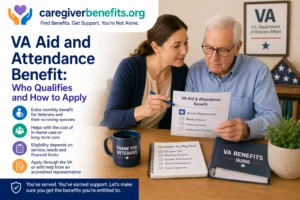
VA Aid and Attendance is an added amount to a VA pension for certain Veterans and survivors who need help with daily activities or are housebound. It is not the same as a caregiver paycheck. Still, it may help the household pay for care.
Learn more at VA Aid and Attendance.
Paid family leave options
Pennsylvania does not currently require a statewide paid family leave program for private workers caring for a seriously ill spouse. Some employers offer paid sick leave, paid family leave, donated leave, short-term disability for the worker’s own illness, or flexible schedules. Ask HR for the written policy.
The federal Family and Medical Leave Act, or FMLA, may protect unpaid time off if you qualify. FMLA can allow eligible workers to take up to 12 workweeks of job-protected leave in a 12-month period for certain family and medical reasons, including care for a spouse with a serious health condition. It does not apply to every worker or every employer.
Ask HR these questions:
- Am I eligible for FMLA?
- Can I use paid sick, vacation, or PTO at the same time?
- Do you need a medical certification form?
- Can I take leave in small blocks for appointments or bad care days?
- Will my health insurance continue during leave?
What to ask before applying
Ask these questions before you spend weeks on the wrong path.
- Is my spouse being screened for CHC long-term services and supports, LIFE, OPTIONS, or another program?
- Who decides clinical need?
- Who decides Medicaid financial eligibility?
- Can my spouse use participant-directed services?
- Can we use Services My Way?
- Can a spouse be paid as the direct care worker under the current rule?
- If not, can another relative, friend, neighbor, or agency worker be paid?
- Can I be the unpaid common law employer or designated representative?
- What background checks, training, forms, and timekeeping rules apply to the worker?
- How many personal assistance hours are approved in the service plan?
- How do we ask for more hours if care needs grow?
- How do we appeal or file a grievance if a service is denied, reduced, or delayed?
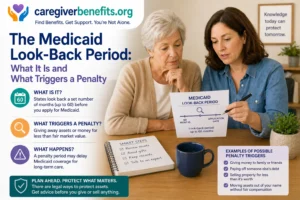
If assets or income may block Medicaid, read Medicaid spend-down and Medicaid look-back period. Do not move money or give away property without advice from a qualified elder law attorney.
If the answer is no
If Pennsylvania Medicaid says a spouse cannot be paid, ask for the reason in writing. A phone answer is not enough when your care plan or income depends on it.
1. Ask what rule they are using
Say: “Please show me the current CHC or Services My Way rule that says a spouse cannot be the paid worker.” Keep the name of the person you spoke with, the date, and what they said.
2. Ask about another paid worker
If you cannot be paid, ask whether an adult child, other relative, friend, neighbor, or agency worker can provide the approved hours. Ask what forms they need to enroll.
3. Ask if you can manage the care
Ask whether you can serve as the unpaid common law employer or designated representative. This may let you help hire, schedule, and supervise an approved worker.
4. Ask for a service plan review
If your spouse needs more help than the plan covers, ask for a reassessment or person-centered service plan review. Be ready to explain the exact tasks, how long they take, and what happens if no one helps.
5. Use appeal or grievance rights
If a CHC plan denies, cuts, or delays a service, ask for the written notice and appeal steps. CHC has complaint, grievance, and fair hearing processes. Watch dates on every notice.
For a broader guide to caregiver pay routes, see Can I get paid to be a caregiver? You can also use the caregiver pay quiz and phone scripts before calling.
Important Pennsylvania warning
Do not rely on a neighbor’s old approval, a pandemic-era rule, or a home care agency ad. Pennsylvania Medicaid rules can change. A managed care plan may also use terms that sound different from state web pages.
Before you make money or work decisions, confirm the current rule with the CHC plan, the service coordinator, Tempus, the PA Independent Enrollment Broker, or the Pennsylvania Department of Human Services.
Tax note for paid family caregivers
If someone in the family is approved and paid as a direct care worker, ask how the pay will be reported. Some Medicaid waiver payments may have special federal tax treatment for live-in caregivers, but the rule depends on the facts.
Read caregiver tax deductions and talk with a qualified tax professional before changing withholding or filing a return.
Resumen en español
En Pennsylvania, por lo general un esposo o esposa no puede recibir pago como trabajador directo bajo las reglas actuales de Community HealthChoices. Puede haber otras formas de ayuda, como servicios en el hogar, otro trabajador aprobado, apoyo de la agencia local de envejecimiento, o programas de VA si la persona que recibe cuidado es Veterano.
Llame primero al PA Independent Enrollment Broker al 1-877-550-4227 si necesita servicios de cuidado a largo plazo en casa. Si ya tiene CHC, llame al coordinador de servicios del plan.
FAQ
Can my husband or wife pay me through Pennsylvania Medicaid?
Usually no under current Community HealthChoices participant-directed worker rules. A spouse cannot be the paid direct care worker for the participant. Ask the CHC plan or service coordinator to confirm the current rule in writing.
Can I be the representative if I cannot be paid?
Possibly. A spouse may be able to help as the unpaid common law employer or designated representative if the participant chooses that and the program accepts the forms. That role is not paid caregiver work.
Can another family member be paid?
Maybe. CHC participant-directed services may allow an approved relative or trusted person to be hired if they meet worker rules. The person cannot be the spouse, power of attorney, legal or designated representative, or guardian of the participant under current rules.
What if my spouse is a Veteran?
Check VA routes. PCAFC can allow an approved spouse to receive a monthly stipend if the Veteran and caregiver meet VA rules. Veteran Directed Care may also let some Veterans hire family members where the program is offered.
Does Pennsylvania have paid family leave for spouse care?
Pennsylvania does not currently require statewide paid family leave for private workers caring for a seriously ill spouse. You may have unpaid FMLA rights, employer paid leave, union leave, or local protections. Ask HR for the written policy.
What should I do if the CHC plan denies services?
Ask for the written notice. Read the deadline. Ask how to file a complaint, grievance, or fair hearing request. Keep copies of all forms and call notes.
About this guide
This guide was written for Pennsylvania spouses and family caregivers who need to know where to start. Program rules, plan names, forms, and worker rules can change. Always confirm with the agency or plan that controls the benefit.
Disclaimer
This is general information, not legal, tax, medical, or financial advice. For legal or tax questions, talk with a qualified professional in your state.
Official sources used
- Pennsylvania Department of Human Services: Community HealthChoices
- Pennsylvania Department of Human Services: Participant-Directed Services
- Pennsylvania DHS / Tempus: PA CHC Common Law Employer Handbook
- Pennsylvania Office of Long-Term Living: Self-Directed Services
- Pennsylvania Department of Aging: OPTIONS Program
- Pennsylvania Department of Aging: Caregiver Support Program
- Pennsylvania Independent Enrollment Broker
- Pennsylvania Department of Aging: Area Agencies on Aging
- VA: Family Caregiver Assistance Program
- VA: Veteran Directed Care
- Administration for Community Living: Veteran Directed Care
- VA: Aid and Attendance and Housebound benefits
- Pennsylvania Department of Aging: Working Caregivers
- U.S. Department of Labor: Family and Medical Leave Act
- Pennsylvania DHS: Request a Hearing or Appeal