North Carolina caregiver pay
Last checked: May 18, 2026
Yes, an adult child may be able to get paid to care for a parent in North Carolina, but only through certain paths. The most likely routes are a Medicaid home care program with self-direction, a limited state aging program, a VA caregiver benefit, or a private written care agreement paid by the parent.
There is no single North Carolina program that pays every adult child for family care. The right first call depends on whether your parent has Medicaid, needs nursing-home-level care, is age 60 or older, is a veteran, or can pay privately.
Quick answer
An adult child can sometimes be paid to care for a parent in North Carolina. The strongest public benefit path is usually NC Medicaid CAP/DA with the CAP/Choice consumer-directed option, if the parent qualifies and the care plan allows it.
North Carolina also has Home Care Independence for some adults age 60 or older, but it is not in every county. Personal Care Services can help with daily care, but it usually pays licensed agencies, not family members directly.
VA programs may help if the parent is an eligible veteran or surviving spouse. If the parent pays you from their own money, use a written care agreement and get tax and Medicaid advice before money changes hands.
Start here
Do these three things first:
- Call the local Department of Social Services. Ask for Adult Medicaid and long-term services. Ask about Personal Care Services, CAP/DA, and CAP/Choice.
- Call the Area Agency on Aging or a local aging provider. Ask if Home Care Independence, Family Caregiver Support, Project C.A.R.E., or respite funds are open in your county.
- If your parent served in the military, call VA or a veterans service officer. Ask about the VA family caregiver program, Aid and Attendance, homemaker services, adult day health care, and respite.
Main options for adult children in North Carolina
| Route | Who it may help | Where to start |
|---|---|---|
| NC Medicaid CAP/DA with CAP/Choice | Adults with disabilities, including many older adults, who meet Medicaid rules and need a nursing-home level of care. | Ask the local DSS or NC Medicaid about CAP/DA and the CAP/Choice consumer-directed option. Ask NCLIFTSS how to make a CAP/DA referral. |
| NC Medicaid Personal Care Services | People who need hands-on help with daily tasks such as bathing, dressing, eating, toileting, or mobility. | Ask the parent’s Medicaid health plan, local DSS, doctor, or NC Medicaid about a PCS assessment. |
| Home Care Independence | Some adults age 60 or older who live at home, need help with daily tasks, and live in a county with a provider. | Ask the Area Agency on Aging or check the Home Care Independence provider directory. |
| VA family caregiver program | Some veterans who need personal care services and have an approved family caregiver age 18 or older. | Apply through VA with the veteran, or ask the VA caregiver support team at the nearest VA medical center. |
| VA Aid and Attendance | Veterans or survivors who get VA pension and need help with daily activities, are housebound, or meet another VA rule. | Ask VA or an accredited veterans service officer about Aid and Attendance and VA Form 21-2680. |
| Private family care agreement | Families where the parent can pay from their own funds and wants to hire an adult child. | Talk with an elder law attorney or tax professional before payment starts. Put the agreement in writing. |
| Family Caregiver Support, Project C.A.R.E., and Lifespan Respite | Caregivers who need respite, training, dementia help, or help finding services. These are usually not full caregiver pay programs. | Call the Area Agency on Aging, Project C.A.R.E. partner, or a referring local agency. |
Medicaid and self-directed care
Medicaid is often the first place families look when they ask, “Can I get paid to be a caregiver?” In North Carolina, the answer depends on the exact Medicaid service.
Important: Medicaid approval for health coverage does not always mean approval for home care hours, waiver services, or payment to a family member. Your parent may need a separate assessment and care plan.
CAP/DA and CAP/Choice
CAP/DA means Community Alternatives Program for Disabled Adults. It is a North Carolina Medicaid home and community-based services waiver. A waiver is a Medicaid program that can pay for care at home instead of care in a facility, when the person meets the program rules.
CAP/DA is for adults age 18 or older who have disabilities and are at risk of institutional care. For many families, this is the main North Carolina Medicaid path to ask about when a parent needs a high level of help at home.
CAP/Choice is the consumer-directed option under CAP/DA. Consumer-directed care means the person receiving care, or an approved person acting for them, has more say over who provides some services. CAP/Choice includes a personal assistant and financial management services. Financial management services help with payroll for workers hired through consumer direction.
This may allow an adult child to be hired as a personal assistant if the parent qualifies, the service is approved in the care plan, the family follows all employer-of-record rules, and no program rule bars the arrangement. Confirm this before you count on payment.
Ask these exact questions:
- “Is my parent eligible for CAP/DA?”
- “Can we ask for CAP/Choice consumer direction?”
- “Can an adult child be hired as the personal assistant in this case?”
- “Who may be the employer of record?”
- “Can the same person direct care and be paid, or is that not allowed?”
- “What training, background checks, timesheets, and payroll steps are required?”
Personal Care Services
Personal Care Services, or PCS, can help a person with daily tasks. These tasks may include eating, getting dressed, bathing, using the bathroom, and moving around.
PCS can be very useful, but it is not the same as a direct family caregiver pay program. NC Medicaid says PCS is provided by trained helpers who work for licensed home care agencies or adult care homes. That means the payment usually goes through an agency.
If your parent gets PCS and you want to be the paid worker, ask the agency if it can hire an adult child. The agency may have its own hiring rules. It may require training, background checks, proof of work eligibility, and set work hours.
Home Care Independence
Home Care Independence is a North Carolina aging program that may let an older adult hire family, friends, or others as a caregiver or personal assistant. It is for people age 60 or older who live at home and need help with personal care or home management tasks.
This program is worth asking about because it is consumer-directed and includes payroll help. But it is not in every county. Also, North Carolina says the person who directs the care cannot also be the paid caregiver.
Call your Area Agency on Aging or the local provider listed in the Home Care Independence provider directory. Ask if the program is open, whether there is a wait list, and whether an adult child can be hired in your situation.
About Structured Family Caregiving in North Carolina
Some states use a program name like Structured Family Caregiving for a live-in family caregiver model. I did not verify a current statewide NC Medicaid adult program with that exact name on official NC Medicaid pages.
North Carolina does list CAP/DA services that may involve consumer direction and coordinated caregiving. Use the official program names when you call: CAP/DA, CAP/Choice, consumer direction, personal assistant, and coordinated caregiving.
Live-in caregiver options
Living with your parent does not, by itself, create a right to payment. It also does not rule out every option. The details matter.
For CAP/DA, North Carolina lists coordinated caregiving as a service where a live-in caregiver takes care of the CAP/DA beneficiary with help from a health care agency. Ask the case manager or NCLIFTSS whether this service applies to your parent, whether payment goes to the caregiver or through an agency, and what records are required.
For Home Care Independence, ask if a live-in adult child can be hired. Also ask who will direct the care. The state says the person who directs care for the individual cannot also be the paid caregiver.
For respite programs, check the rules before you choose a worker. North Carolina Lifespan Respite rules say the worker chosen by the caregiver cannot live in the same home as the care recipient and cannot already be involved in hands-on care.
State warning: Rules can change. Counties, managed care plans, waiver contractors, agencies, and local providers may use different names. Always confirm the current rule with official North Carolina sources before you depend on payment.
VA options if your parent is a veteran or surviving spouse
VA benefits are separate from North Carolina Medicaid. A parent may have one, both, or neither. Do not assume that Medicaid denial means VA denial.
VA family caregiver program
The VA family caregiver program may provide a monthly stipend to an approved primary family caregiver. VA rules say the caregiver must be at least 18 and may be a son, daughter, spouse, parent, stepfamily member, extended family member, or someone who lives with the veteran or is willing to do so if approved.
This is not for every veteran. The veteran and caregiver must apply together and meet VA rules. Ask the VA caregiver support team what medical records and care needs are needed for the application.
VA Aid and Attendance
VA Aid and Attendance is an added monthly payment for qualified veterans or survivors who already get VA pension and need help with daily activities, are housebound, or meet another VA rule. It is paid to the veteran or survivor, not automatically to the adult child.
If your parent uses the added VA money to pay you, use a written care agreement and keep records. Ask an accredited veterans service officer and a tax professional how to do it correctly.
If your parent pays you privately
A parent can often choose to pay an adult child from private funds. This can help a family keep care at home. But it must be handled carefully.
Do not treat private payments as casual gifts if the real purpose is care. That can create tax problems. It can also create Medicaid problems later if your parent applies for long-term care Medicaid, CAP/DA, PACE, or nursing facility coverage.
Use a written caregiver agreement
A caregiver agreement should be signed before paid care starts. It should say:
- who is being hired;
- what care tasks will be done;
- where care will happen;
- the pay rate;
- the work schedule;
- how payment will be made;
- how taxes and payroll will be handled;
- how the agreement can end; and
- who keeps timesheets and receipts.
The rate should be reasonable for the work and area. Keep a care log. Keep proof of payments. Do not take a large back payment for past care without legal advice. Medicaid may treat some transfers for less than fair market value as a problem.
For more help, see the care cost calculator, caregiver tax deductions, and Medicaid look-back period.
Tax and Medicaid cautions
Tax issues
The IRS says caregivers who provide in-home services for elderly or disabled people are often employees of the person receiving care when that person has the right to tell them what work to do. Family members may or may not fall under special tax rules.
If your parent pays you, ask a tax professional whether you are a household employee, whether your parent must issue a W-2, whether household employer taxes apply, and how you should report the income.
If a Medicaid, VA, insurance, or agency program pays you, ask how the payment will be reported. Do not guess. Save every pay stub, tax form, and contract.
Medicaid look-back and transfer issues
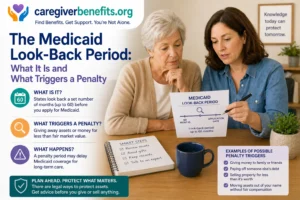
North Carolina Medicaid can review transfers of assets when a person asks Medicaid to pay for nursing facility care, CAP, or PACE. The state transfer form says a transfer evaluation checks whether assets were given away or sold for less than current market value to become eligible for Medicaid institutional services.
This matters for family caregiver pay. A written care agreement, fair pay, and good records can help show that payments were for real care. They do not promise Medicaid approval. Ask an elder law attorney before large payments, retroactive payments, home transfers, or changes to deeds and bank accounts.
For Medicaid basics, see Medicaid HCBS waivers explained and Medicaid spend-down.
Estate recovery
North Carolina gives an estate recovery notice to some Medicaid applicants and beneficiaries age 55 and older. The notice says recovery may apply when Medicaid pays for home and community-based services, nursing facility services, hospital care, PCS, prescription drugs, and certain other costs.
Estate recovery rules are not a reason to avoid needed care. They are a reason to ask questions early. Ask DSS how estate recovery may apply to your parent’s services.
How to start
The best first call in North Carolina is usually the local Department of Social Services if your parent needs Medicaid, home care, or a waiver. If your parent is already on Medicaid managed care, also call the health plan on the Medicaid card.
Phone script for DSS or NC Medicaid
“Hi, I am caring for my parent at home in North Carolina. My parent needs help with bathing, dressing, meals, toileting, and getting around. I need to ask about Adult Medicaid long-term services, Personal Care Services, CAP/DA, and CAP/Choice consumer direction. Can you tell me how to request an assessment and whether an adult child can be hired if my parent qualifies?”
Phone script for the Area Agency on Aging
“Hi, I care for my parent at home. My parent is age 60 or older. I want to ask if Home Care Independence is available in our county. I also need help with Family Caregiver Support, Project C.A.R.E. if dementia is involved, and respite options. Who handles intake?”
Phone script for VA
“Hi, my parent is a veteran and needs help with daily care at home. I am the adult child caregiver. I want to ask about the VA family caregiver program, Aid and Attendance, homemaker and home health aide services, adult day health care, and respite. Who can screen us?”
Documents to gather
- Parent’s full legal name, date of birth, Social Security number, and address.
- Medicaid card, Medicare card, VA card, and private insurance cards.
- Photo ID and proof of North Carolina residency.
- Proof of income, such as Social Security, pension, wages, or tax records.
- Bank statements and other asset records if applying for long-term care Medicaid.
- Doctor list, medicine list, diagnoses, hospital papers, and discharge papers.
- A list of daily care needs: bathing, dressing, toileting, eating, walking, transfers, memory problems, falls, and supervision needs.
- Power of attorney, guardianship papers, or authorized representative forms, if any.
- Caregiver work log, if you are already providing care.
- Denial letters, notices, or plan letters you do not understand.
Common mistakes to avoid
- Assuming every Medicaid program lets a family member get paid.
- Waiting to ask about CAP/Choice until after services are already set up.
- Accepting a phone denial without asking for the rule, next step, or appeal rights.
- Letting a parent pay cash with no written agreement, no timesheets, and no tax plan.
- Taking a large payment for past care without legal advice.
- Missing VA options when the parent is a veteran or surviving spouse.
- Forgetting respite. Even when caregiver pay is not approved, respite may still help.
Where respite fits
Respite means short-term relief for the caregiver. It is not the same as a steady paycheck. But it can still help you keep your parent safe at home.
North Carolina’s Family Caregiver Support Program may offer information, help getting services, counseling, caregiver training, short-term respite, and limited extra services. It does not pay caregivers to provide continuous care.
Project C.A.R.E. helps caregivers of people with Alzheimer’s disease or related dementia. It may include care consultation, dementia information, caregiver education, and funds for self-directed respite when available.
NC Lifespan Respite may reimburse eligible family caregivers for a limited amount of respite care in a calendar year when funds are open. A local professional organization must refer the family.
For more, see respite care for caregivers.
FAQ
Can I get paid by North Carolina Medicaid to care for my parent?
Maybe. Ask about CAP/DA and CAP/Choice. If your parent qualifies and the care plan allows consumer direction, an adult child may be able to be hired as a personal assistant. Confirm the rule with NC Medicaid, NCLIFTSS, the case manager, and the payroll service before you depend on payment.
Does PCS pay adult children directly?
Usually no. PCS is commonly provided through licensed agencies or adult care homes. An adult child who wants to be the worker should ask the agency whether it can hire them and what rules apply.
Is Home Care Independence available everywhere in North Carolina?
No. North Carolina says the service is not provided in every county. Ask your Area Agency on Aging or check the state provider directory.
Can I be paid if I live with my parent?
Possibly, but not through every program. CAP/DA has a coordinated caregiving service tied to live-in caregiving. Other programs may limit who can be paid. Ask before you apply.
What if my parent is not on Medicaid?
Apply for NC Medicaid if your parent may qualify. North Carolina says people can apply online through ePASS, in person at DSS, by phone through DSS, or by mail, email, fax, or drop-off. If your parent is a veteran, check VA options too.
Can my parent just pay me?
They may be able to pay you privately. Use a written care agreement, keep timesheets, pay by check or bank transfer, and ask a tax professional how to report the income. Ask an elder law attorney if your parent may need Medicaid later.
Resumen en español
En Carolina del Norte, un hijo adulto puede recibir pago por cuidar a su padre o madre en algunos casos. Las rutas principales son Medicaid CAP/DA con CAP/Choice, Home Care Independence si está disponible en su condado, beneficios de VA, o un acuerdo privado por escrito.
Llame primero al Departamento de Servicios Sociales de su condado. Pregunte por Adult Medicaid, Personal Care Services, CAP/DA y CAP/Choice. Si su padre o madre es veterano, pregunte también a VA.
About this guide
This guide is for North Carolina family caregivers who need payment, coverage, respite, or first steps. It uses official sources where possible. Local offices and plans may use different words for the same service.
This is general information, not legal, tax, medical, or financial advice. For legal or tax questions, talk with a qualified professional in your state.
Official sources used
- NC Medicaid: How To Apply for NC Medicaid
- NC Medicaid: Community Alternatives Program for Disabled Adults
- NC Medicaid: CAP/DA Fact Sheet
- NC Medicaid: Personal Care Services
- NCDHHS Division of Aging: Home Care Independence
- NCDHHS Division of Aging: Family Caregiver Support Program
- NCDHHS Division of Aging: Project C.A.R.E.
- NCDHHS Division of Aging: NC Lifespan Respite Program
- NC Medicaid: NC Medicaid Ombudsman
- NCDHHS Policies and Manuals: MA-2240 Transfer of Assets
- NCDHHS: Transfer of Assets Evaluation Form
- NCDHHS: Estate Recovery Notice
- IRS: Family caregivers and self-employment tax
- IRS Publication 926: Household Employer’s Tax Guide
- VA: Family caregiver program
- VA: Aid and Attendance benefits and Housebound allowance