North Carolina caregiver benefits
Last checked: May 18, 2026
North Carolina Medicaid may allow some people in the Community Alternatives Program for Disabled Adults (CAP/DA) to hire a family member through consumer-directed services. This is not the same as regular Personal Care Services (PCS), which usually sends an aide through an agency. The main words to ask for are CAP/DA consumer direction, CAP/CD, or consumer-directed services.
Rules can change. Counties, managed care plans, waiver contractors, case management agencies, and provider agencies may use different names. Confirm the current rule with NC Medicaid, NC LIFTSS, the CAP/DA case management entity, or the financial management provider before anyone starts work.
Quick answer
Yes, sometimes. In North Carolina, some CAP/DA waiver participants can use consumer-directed services to hire and supervise a personal assistant. A spouse, adult child, parent, sibling, step-parent, or other relative may be allowed if the person meets the hiring rules, passes required checks, and is not the person directing the care or acting as legal representative.
The regular PCS program is different. PCS is provided through an agency, and official PCS policy says an agency may not assign an aide who is related to the beneficiary or lives with the beneficiary. So the first step is to find out whether the person is asking about CAP/DA consumer direction or regular PCS.
Start here
- If the person already has CAP/DA: call the CAP/DA case manager and ask, “Can we switch to consumer direction, also called CAP/CD or CAP/Choice, so we can hire a family member as a personal assistant?”
- If the person does not have CAP/DA: call NC LIFTSS at 833-522-5429 and ask for a CAP/DA referral. You can also contact a local CAP/DA case management entity in the county where the person lives.
- If the person only has PCS: ask whether CAP/DA may fit, because regular PCS is agency-based and does not usually let a related or live-in aide be assigned.
Main programs and routes in North Carolina
| Program or route | Who it may help | Where to start |
|---|---|---|
| CAP/DA consumer direction | Adults 18 or older with serious health needs who meet CAP/DA rules and need home and community-based services instead of nursing home care. | Call the CAP/DA case manager or NC LIFTSS. Ask for “CAP/DA consumer direction,” “CAP/CD,” or “CAP/Choice.” |
| CAP/DA coordinated caregiving | Some CAP/DA participants with a live-in caregiver who needs agency support and coaching. This is not the same as hiring a worker through self-direction. | Ask the CAP/DA case manager whether “coordinated caregiving” is in the plan of care and whether it fits the home situation. |
| Personal Care Services (PCS) | Medicaid members who need help with daily activities such as bathing, dressing, eating, toileting, and mobility. | Ask a doctor or practitioner about the PCS request form. PCS uses licensed agencies and is not the main family-hire route. |
| Area Agency on Aging and Family Caregiver Support | Older adults, family caregivers, and some relatives caring for adults with disabilities who need respite, information, or local help. | Use the North Carolina Area Agency on Aging map or ask county DSS for the local aging office. |
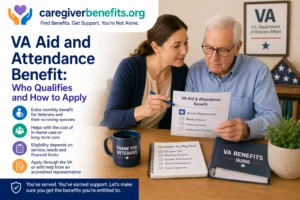
| VA Aid and Attendance | Some Veterans and survivors who get VA pension and need help with daily activities or are housebound. | Start with VA.gov, a county veterans service office, or an accredited VA representative. Also see VA Aid and Attendance. |
What self-directed care means
Self-directed care means the person getting services, or a chosen employer of record, has more control over who provides some approved care.
In North Carolina CAP/DA, consumer direction can let the participant or representative choose a personal assistant, help set the work schedule, assign approved tasks, and supervise the worker. The care still has to fit the approved plan of care. Medicaid does not pay for extra hours just because a family needs more help.
The person directing the care has duties. They may need to help make a job description, keep timesheets and task sheets, make a backup plan, track the budget, and work with the case manager and financial management provider.
A financial management provider, sometimes called an FM or fiscal agent, handles payroll tasks. The FM helps with employment paperwork, tax withholding, background checks, claims, budget reports, and pay statements. The FM does not make every family decision. It is there to help make payroll and Medicaid rules work.
For a broader Medicaid waiver overview, see Medicaid HCBS waivers explained.
Program name in North Carolina
The main Medicaid route to ask about is Community Alternatives Program for Disabled Adults (CAP/DA). Within CAP/DA, the self-directed option is called consumer direction or consumer-directed services. Some staff may also use older or related names such as CAP/Choice or CAP/CD.
CAP/DA is for adults age 18 or older with disabilities or serious health conditions who meet a level of care review and need at least one CAP/DA home and community-based service. NC Medicaid also says a person must qualify for long-term care NC Medicaid in an approved group and be enrolled in NC Medicaid Direct to get CAP/DA services.
CAP/DA can have a waitlist. If the person is placed on the waitlist, ask NC LIFTSS how to check the status and what other Medicaid or aging services can help while the family waits.
Warning: Do not assume Medicaid expansion or regular Medicaid approval means CAP/DA approval. CAP/DA has its own medical, functional, and waiver rules.
Who can be hired
For CAP/DA consumer direction, North Carolina policy allows some relatives to be hired as the paid employee if they meet the rules. This can include a spouse, parent, step-parent, adult child, sibling, or other relative.
The worker must usually be at least 18. The worker must meet the qualifications tied to the needs assessment and the employer or hiring agency. The worker must also pass required criminal history and health care registry checks.
The worker’s other job, school, or home duties cannot get in the way of the approved care. If the worker cannot show up for approved hours, the plan needs a backup.
Some people cannot be hired unless an exception is approved. This can include a legal guardian, Power of Attorney, Health Power of Attorney, or another legally responsible person. A person who directs the care for the Medicaid participant also cannot be the same person who is paid to provide the care.
That last rule matters in real homes. An adult child may be the best caregiver, but if that adult child is also the legal representative, guardian, or employer of record, the family should ask the case manager and FM before filing hiring papers. The family may need a different person to direct care, or an exception may need review.
For a broader overview of paid family care routes, see Can I get paid to be a caregiver? You can also use the paid caregiver quiz to sort common paths.
Spouse and adult child rules
A spouse may be allowed to work as a paid personal assistant under CAP/DA consumer direction if all hiring rules are met. This does not mean every spouse will be approved. The plan must show the need for the service, the spouse must meet worker rules, and the spouse cannot also be the person directing the care.
An adult child may also be allowed if the adult child meets the same worker rules. The adult child should not be serving as guardian, Power of Attorney, Health Power of Attorney, or employer of record unless the case manager and FM confirm that the arrangement is allowed or an exception is approved.
Live-in caregivers need extra paperwork. North Carolina defines a paid live-in caregiver as a person who lives in the same household as the waiver participant and is hired and paid by an agency or through consumer direction to help with activities of daily living and instrumental activities of daily living. The provider or FM must keep proof that the paid live-in caregiver shares the same address. Proof can include a photo ID and another item such as a utility bill, credit card statement, lease, or other approved proof.
Live-in status may affect Electronic Visit Verification, often called EVV. EVV is the system used to record the date, time, place, person receiving care, person giving care, and service provided for many personal care-type services. Some paid live-in caregivers may be excluded from certain EVV capture rules, but the attestation and proof matter.
Ask before changing legal papers. Do not remove a trusted person from a Power of Attorney just to try to make payroll work. Ask the case manager, the FM, and a qualified legal professional first.
Payroll and timesheets
In consumer direction, the family does not just get a check and pay cash. The worker is paid through the approved financial management provider.
The FM helps with payroll, taxes, background checks, age verification, claims, budget tracking, and pay statements. The employer of record still has daily duties. The employer of record should know who is scheduled, what tasks are approved, what hours are allowed, and what to do when the worker misses a shift.
Common payroll steps include:
- Complete consumer direction training.
- Complete the self-assessment or readiness paperwork.
- Choose or confirm the employer of record.
- Work with the case manager on the person-centered plan of care.
- Choose the personal assistant and complete employment paperwork.
- Wait for background and registry checks.
- Confirm the pay rate, approved hours, and budget.
- Submit timesheets, task records, and EVV records if required.
Payment can be delayed if a worker starts before approval, misses a signature, fails a required check, uses the wrong code, exceeds approved hours, or submits late timesheets. Payment can also be affected if the Medicaid participant has a deductible or spend-down. Learn more about that issue at Medicaid spend-down.
How to switch from agency care
If the person is already on CAP/DA and receives agency care, start with the CAP/DA case manager. Ask for a meeting about consumer direction. You do not need to blame the agency. Keep the request simple.
Phone script
“My family member is on CAP/DA. We want to ask about consumer direction, also called CAP/CD or CAP/Choice. We want to know if a family member can be hired as the personal assistant. Can you tell us the steps, training dates, financial management provider, and any rules about spouses, adult children, live-in caregivers, Power of Attorney, or guardians?”
Ask the case manager for the steps in writing if possible. The switch may require training, a self-assessment, a risk agreement, an updated plan of care, a budget, employer paperwork, worker paperwork, and FM approval.
Do not stop agency care until the new arrangement is approved and ready. If the agency has missed shifts, ask for a backup plan in the plan of care. If the person is not safe at home, say that clearly.
Who to call first in North Carolina
If you need CAP/DA or want to check a CAP/DA referral: call NC LIFTSS at 833-522-5429. You can also call Acentra Health at 919-568-1717. Ask for a CAP/DA referral or referral status.
If the person already has CAP/DA: call the CAP/DA case manager or case management entity. Ask for consumer direction, CAP/CD, CAP/Choice, personal assistance, financial management, and coordinated caregiving if a live-in caregiver is involved.
If the person needs to apply for Medicaid first: use ePASS or call the local Department of Social Services. NC Medicaid says you can apply online, in person, by phone, by mail, by email, by fax, or by drop-off through local DSS. For help finding DSS, call the NC Medicaid Contact Center at 888-245-0179.
If the issue is a Medicaid notice, plan problem, or care problem that is not getting fixed: call the NC Medicaid Ombudsman at 877-201-3750.
For call prep, see caregiver phone scripts and caregiver checklists.
Documents to gather before you call
- Medicaid card or Medicaid ID number, if the person has one.
- Full name, date of birth, address, phone number, and county.
- Doctor names, diagnoses, medications, hospital stays, falls, and recent rehab or nursing home stays.
- A list of daily tasks the person needs help with: bathing, dressing, toileting, eating, transfers, walking, meal prep, shopping, and medicine reminders.
- Current home care agency name, missed shifts, schedule problems, and any safety concerns.
- Names of family members who want to be paid, where they live, and whether they have another job.
- Copies of guardianship, Power of Attorney, Health Power of Attorney, or authorized representative papers.
- For a live-in caregiver: photo ID and address proof such as a lease, utility bill, or approved statement.
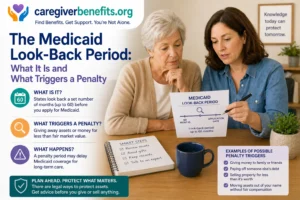
- Income and asset papers if Medicaid eligibility, long-term care Medicaid, Medicaid look-back rules, or spend-down may apply.
Common problems
Problem: The family asks for “paid caregiver” but the office hears “PCS”
Say the exact words: “CAP/DA consumer direction” or “CAP/CD.” Regular PCS is not the same and usually will not let a related or live-in aide be assigned.
Problem: The same person wants to direct care and get paid
North Carolina sources warn that the person directing care cannot also be the paid caregiver. Ask whether a different employer of record can be used, or whether an exception process exists for the case.
Problem: A spouse or adult child is also Power of Attorney
This can block payment unless the case fits an approved exception. Ask the case manager and FM before any worker starts.
Problem: The worker starts before approval
Do not start paid hours until the plan, worker, checks, and payroll setup are approved. Medicaid may not pay for work done too early.
Problem: Timesheets or EVV records are late
Late records can delay pay. Keep a simple weekly checklist and save copies of submitted timesheets or visit records.
Problem: The person has a Medicaid deductible or spend-down
Ask how the deductible affects the personal assistant’s pay. NC Medicaid policy says Medicaid does not pay for services while the beneficiary is in deductible status.
For care cost planning outside Medicaid, see the care cost calculator and caregiver tax deductions.
What about structured family caregiving?
Some states use the term “Structured Family Caregiving” for a live-in caregiver model. In the current North Carolina sources checked for this guide, the Medicaid CAP/DA service name to ask about is coordinated caregiving, not Structured Family Caregiving.
Coordinated caregiving is listed as a CAP/DA service. It is tied to a live-in caregiver and an agency support model. It is different from consumer direction, where the employer of record hires and supervises a personal assistant with financial management support.
If someone tells you North Carolina has Structured Family Caregiving, ask for the official program name, Medicaid service code if they have it, the provider agency name, and whether it is part of CAP/DA.
Resumen en espanol
En Carolina del Norte, algunas personas en CAP/DA pueden usar “consumer direction” para contratar a un asistente personal. A veces puede ser un familiar, incluyendo un esposo o esposa o un hijo adulto, si cumple las reglas.
PCS regular no es lo mismo. PCS usa agencias, y por lo general no permite que la agencia mande a un asistente que sea familiar o viva en la misma casa. Llame a NC LIFTSS al 833-522-5429 y pregunte por CAP/DA consumer direction.
FAQ
Can my spouse be paid to care for me in North Carolina?
Sometimes. A spouse may be allowed as a paid worker under CAP/DA consumer direction if the spouse meets worker rules and is not also the person directing care or acting as a legal representative. This is not the usual rule for regular PCS.
Can an adult child be paid as the caregiver?
Sometimes. An adult child may be hired under CAP/DA consumer direction if the adult child is at least 18, meets qualifications, passes required checks, and is not barred because of a representative, guardian, or Power of Attorney role.
Is PCS self-directed in North Carolina?
Regular Personal Care Services is agency-based. Official PCS policy says an agency may not assign an aide who is related to the beneficiary or lives with the beneficiary. Ask about CAP/DA consumer direction if the goal is to hire a family member.
Who pays the family caregiver?
In CAP/DA consumer direction, an approved financial management provider handles payroll. Families should not pay cash and expect Medicaid to repay them later unless the program gives clear written instructions.
Can a live-in caregiver be paid?
A paid live-in caregiver may be allowed in CAP/DA if the person meets the service and hiring rules. The provider or financial management provider must keep proof that the caregiver and participant share the same address.
What should I ask for on the phone?
Say, “I am asking about CAP/DA consumer direction, also called CAP/CD or CAP/Choice. Can a family member be hired as the personal assistant, and what steps do we need to take?”
About this guide
This guide was written for family caregivers who need to know where to start in North Carolina. It focuses on Medicaid self-directed care, CAP/DA, family caregiver payment rules, and practical steps. Program rules can change. Always confirm the current rule with NC Medicaid, NC LIFTSS, the case management entity, or the financial management provider.
Disclaimer
This is general information, not legal, tax, medical, or financial advice. For legal or tax questions, talk with a qualified professional in your state.
Official sources used
- NC Medicaid – Community Alternatives Program for Disabled Adults (CAP/DA), beneficiary page
- NC Medicaid – CAP/DA provider page
- NC LIFTSS – CAP/DA eligibility and application
- NC Medicaid Clinical Coverage Policy 3K-2 – CAP/DA
- NC Medicaid – Personal Care Services (PCS)
- NC Medicaid Clinical Coverage Policy 3L – Personal Care Services
- NC Medicaid – Community Alternatives Program consumer direction training
- NC Medicaid – CAP/DA waitlist bulletin
- NC Medicaid – Electronic Visit Verification for CAP/C and CAP/DA
- NC Medicaid – How to apply
- NC Medicaid Ombudsman
- NC DHHS Division of Aging – Family Caregiver Support Program
- NC DHHS – Area Agencies on Aging map
- U.S. Department of Veterans Affairs – Aid and Attendance and Housebound benefits
- U.S. Department of Labor – FLSA and direct care workers