Michigan caregiver leave and pay
Last checked: May 18, 2026
If you need time away from work to care for a parent, spouse, child, or other loved one in Michigan, the first question is simple: will anyone pay you while you are off?
The answer depends on the type of leave. Michigan has earned sick time that may cover short family-care needs. But Michigan does not currently have a broad state paid family leave insurance program that pays workers for weeks off to care for a family member.
Quick answer
Michigan does not currently have a broad state paid family leave program for caregivers. A Michigan worker may have paid earned sick time for short caregiving needs, and some workers may have unpaid, job-protected FMLA leave.
If you need ongoing pay for family caregiving, look at Medicaid Home Help, MI Choice, PACE, VA caregiver benefits, employer leave, and respite care. These are different programs. They do not all pay the same person or cover the same care.
Start here
- Ask your employer for your leave options in writing. Ask about Michigan earned sick time, PTO, short-term disability, FMLA, and any union or employer caregiver leave.
- If your loved one needs hands-on help at home, call the Adult Services unit at your local county MDHHS office. Ask for Home Help and Medicaid long-term care options.
- If your loved one is age 60 or older, call the local Area Agency on Aging. Ask about caregiver support, respite, MI Choice, adult day services, and in-home help.
Michigan warning
Rules can change. Counties, managed care plans, waiver agencies, and state offices may use different names for the same type of help. Always confirm with official Michigan sources, your employer, your union if you have one, or the agency handling the case.
Main programs and routes
| Program or route | Who it may help | Where to start |
|---|---|---|
| Michigan earned sick time | Workers who need short paid time for their own health need or a family member’s health care | Employer HR or payroll. If denied, Michigan LEO Wage and Hour Division |
| FMLA | Eligible workers who need job-protected unpaid leave to care for a spouse, parent, or child with a serious health condition | Employer HR, leave office, or benefits office |
| Employer PTO or caregiver leave | Workers whose employer gives paid time off, caregiver leave, sick bank time, or union leave | Employee handbook, union contract, HR, or payroll |
| Michigan Medicaid Home Help | Medicaid clients who need hands-on help with daily activities at home | Adult Services unit at the local county MDHHS office |
| MI Choice Waiver | Adults who meet nursing facility level of care and can receive Medicaid services at home or in the community | Local MI Choice waiver agency or Area Agency on Aging |
| PACE | Adults age 55 or older in a PACE service area who meet long-term care criteria and can live safely in the community | Local PACE provider |
| VA caregiver and pension benefits | Caregivers of eligible Veterans, or Veterans and survivors who need help with daily activities | VA caregiver support team, VA.gov, or an accredited VA representative |
| Respite care | Family caregivers who need a break or short-term help | Area Agency on Aging, MI Choice, VA, or local caregiver programs |
Does Michigan have paid family leave for caregivers?
No broad state paid family leave program was found for Michigan as of the date checked above.
This means Michigan does not have a state insurance program that most workers can apply to for weeks of wage replacement while caring for a seriously ill family member.
Michigan does have earned sick time. This is different from paid family leave. Earned sick time is usually measured in hours, not weeks. It may help when you need time for a family member’s medical care, treatment, diagnosis, or other covered reason.
For longer leave, many Michigan workers look at FMLA. FMLA is a federal law. It can protect your job if you qualify, but it is unpaid unless you use paid time from another source at the same time.
If your main problem is not time off work, but how to get paid for care you already give at home, look at caregiver pay options, the caregiver pay quiz, Medicaid Home Help, VA caregiver benefits, and respite programs.
Who qualifies
Michigan earned sick time
Michigan earned sick time may apply if you are an eligible employee working in Michigan. Some workers are exempt. Small business timing and limits can differ.
Covered family members under Michigan earned sick time include many relatives. The state list includes children, parents, grandparents, grandchildren, siblings, domestic partners, and other people related by blood.
You may be able to use earned sick time for a family member’s mental or physical illness, injury, health condition, medical diagnosis, care, treatment, or preventive medical care.
FMLA
FMLA may apply if your employer is covered and you meet the work history rules. In general, you must have worked for the employer for at least 12 months, worked at least 1,250 hours in the 12 months before leave starts, and work at a site where the employer has at least 50 employees within 75 miles.
For regular family-care FMLA, covered family members are usually your spouse, parent, or child with a serious health condition. FMLA rules for military caregiver leave are different.
A serious health condition is more than a normal short illness. It may involve inpatient care or continuing treatment by a health care provider.
Michigan Medicaid Home Help
Home Help may help when the person needing care has Medicaid and needs hands-on help with at least one activity of daily living. Activities of daily living include needs like bathing, dressing, eating, moving through the home, transferring, using the toilet, grooming, and some complex care tasks.
Home Help is for the person who needs care. It is not a paid leave program for the worker. But it may allow the Medicaid client to hire a provider, including some relatives, friends, neighbors, or an agency.
Michigan says a client’s spouse cannot be paid by MDHHS to provide Home Help care. A parent caring for a minor child also cannot be paid by MDHHS for that child’s Home Help care.
MI Choice and PACE
MI Choice may help adults who meet income, asset, and care need rules and who need a nursing facility level of care but can receive services at home or in another community setting.
PACE may help adults age 55 or older who live in a PACE service area, meet long-term care criteria, and can live safely in the community at the time of enrollment.
These programs may reduce the care load on a family caregiver. They may also include services such as adult day health, respite, care coordination, home care, and other supports. Ask the program directly if a family member can be paid for any service. Do not assume.
How much pay and how much time
| Route | Pay | Time | Job protection |
|---|---|---|---|
| Michigan earned sick time | Paid at the greater of the worker’s normal hourly or base wage, or Michigan minimum wage. It does not have to include overtime, tips, bonuses, or some other extra pay. | Accrues at least 1 hour for every 30 hours worked. Small businesses may limit use to 40 hours per year. Other employers may limit use to 72 hours per year. | State law has anti-retaliation rules for covered earned sick time use. |
| FMLA | Unpaid by itself. Paid leave can run at the same time if allowed or required under the rules. | Up to 12 workweeks in a 12-month period for most covered family and medical reasons. Military caregiver leave can be longer. | Yes, if you qualify. Health benefits continue under FMLA rules. |
| Employer PTO, sick bank, union leave, or caregiver leave | Depends on employer policy or contract. | Depends on employer policy or contract. | Depends on FMLA, state law, employer policy, and contract rights. |
| Home Help | Payment is for approved Home Help services to the approved provider. The rate is based on the county where the client lives. | Approved hours are based on the person’s assessed needs and written Time and Task document. | Not a job leave program. |
| VA caregiver program | Some approved Primary Family Caregivers may receive a monthly stipend. Many caregivers may get support services even if they do not get a stipend. | Depends on VA eligibility and care needs. | Not a job leave program. |
How to apply
Step 1: Ask your employer for leave in writing
If you are employed, start with HR, payroll, your supervisor, or your leave office. Ask for the rules in writing.
Use plain words. Say you need time off to care for a family member with a health condition. Ask which paid and protected leave options apply.
Step 2: Ask about Michigan earned sick time
Ask how many earned sick time hours you have. Ask whether your employer uses a separate sick-time bank or a combined PTO bank.
If the need is planned, follow your employer’s written notice rule. If the need is sudden, give notice as soon as you can.
Step 3: Ask if FMLA applies
Ask for FMLA paperwork if your loved one’s condition may need days, weeks, or repeated appointments. Your employer may require medical certification.
For family-care FMLA, the common federal form is WH-380-F. Your employer may use its own form if it asks only for information allowed by FMLA rules.
Step 4: If the care need is ongoing, call MDHHS or aging services
If your loved one needs hands-on help at home, call the Adult Services unit at the local county MDHHS office and ask for Home Help.
If your loved one is older, also call the Area Agency on Aging and ask about caregiver support, respite, MI Choice, adult day services, and in-home services.
Step 5: If your loved one is a Veteran, call VA
Ask the VA caregiver support team about the caregiver program, general caregiver support, respite, Aid and Attendance, and help from an accredited representative.
VA rules can be strict. A denial from one VA program does not always mean there is no other VA route.
What to say on the phone
Call to employer HR or payroll
“I need time off to care for a family member with a health condition. Please tell me, in writing, whether I can use Michigan earned sick time, PTO, FMLA, short-term disability, or any caregiver leave. If medical certification is needed, please send the correct form and deadline.”
Call to local county MDHHS Adult Services
“I am caring for someone at home who needs hands-on help with daily activities. I want to ask about Home Help and Medicaid long-term care services. Can I speak with Adult Services, and can someone tell me how to make a Home Help referral?”
Call to Area Agency on Aging
“I am a family caregiver in Michigan. I need to ask about respite, in-home help, caregiver support, adult day services, and MI Choice. Can you screen us or tell me which office handles this for our county?”
Call to VA caregiver support
“I care for a Veteran at home. I want to ask about caregiver support, respite, PCAFC, Aid and Attendance, and what forms or records we should gather.”
How it works with FMLA
FMLA and paid time are not the same thing.
FMLA can protect your job if you qualify. It can also require your group health benefits to continue under the same conditions as if you were still working.
FMLA itself is unpaid. But paid time can run at the same time as FMLA in some cases. This may include PTO, sick leave, or Michigan earned sick time if the reason for leave also fits the paid-time rules.
Michigan’s earned sick time FAQ says earned sick time may run at the same time as approved FMLA if the leave also meets FMLA requirements. Once earned sick time is used up or not being used, the FMLA or other leave rules apply.
This matters because you may have two questions at once:
- Will my job be protected?
- Will I be paid?
Ask both questions. Do not accept a vague answer such as “you can take leave.” Ask whether the leave is paid, unpaid, protected, or only allowed under employer policy.
If Michigan does not have paid leave
If you need weeks off to care for someone and Michigan earned sick time is not enough, try these routes.
Ask about FMLA
FMLA may protect your job even if it does not pay you. Ask HR for the FMLA notice, forms, and deadline.
Use employer paid time
Ask about PTO, sick time, vacation, personal time, donated leave, union leave, remote work, reduced schedule, and flexible schedule options.
Check Medicaid caregiver pay routes
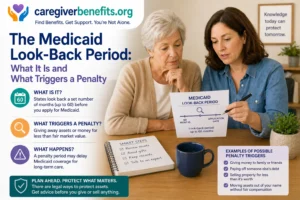
For a loved one with Medicaid and hands-on care needs, ask MDHHS about Home Help. Also read Medicaid HCBS waivers, Medicaid spend-down, and the Medicaid look-back period.
Ask about MI Choice or PACE
These programs may bring services into the home or community. They can reduce the number of unpaid hours a family caregiver must cover.
Check VA benefits
If the person needing care is a Veteran or surviving spouse, ask about the VA caregiver program and VA Aid and Attendance.
Use respite as a backup
Respite may not replace your wages, but it can give you covered help while you work, sleep, handle forms, or get through a crisis. Start with respite care for caregivers.
Documents to gather
Keep copies. Write down the date you sent each item.
- Your employer’s leave policy, PTO policy, sick time policy, and union contract if you have one
- Your pay stubs and work schedule
- Your earned sick time or PTO balance
- Doctor note or medical certification, if requested
- Dates you need off and whether the leave is full-time, part-time, or intermittent
- Your loved one’s diagnosis or care plan, if needed for a program
- List of daily tasks your loved one needs help with, such as bathing, dressing, meals, transfers, toileting, and medication setup
- Medicaid card or Medicaid case number, if applying for Home Help
- MI Bridges account information, if applying for Medicaid or checking benefits
- Power of attorney, guardianship order, or representative papers, if you sign forms for someone else
- VA discharge papers, VA rating letters, pension papers, or VA health enrollment details, if the person is a Veteran
For more help, use caregiver checklists, phone scripts, and the care cost calculator.
Tax and cost notes
Caregiver pay can affect taxes, Medicaid, benefits, and household budgets. Keep records of payments, hours, mileage, supplies, and care costs.
Some families may also want to read about caregiver tax deductions. For tax questions, talk with a qualified tax professional.
Resumen en español
Michigan no tiene un programa estatal amplio de licencia familiar pagada para cuidadores. Algunos trabajadores pueden usar tiempo pagado por enfermedad para cuidar a un familiar, pero ese tiempo suele ser por horas, no por semanas.
Si necesita faltar al trabajo, llame primero a recursos humanos y pregunte por tiempo por enfermedad, PTO y FMLA. Si la persona necesita ayuda en casa, llame a la oficina local de MDHHS y pida hablar con Adult Services sobre Home Help.
FAQ
Does Michigan pay me to take care of my parent?
Not through a broad state paid family leave program. If your parent has Medicaid and needs hands-on help, Home Help may be a route to ask about. If your parent is a Veteran, VA benefits may also matter.
Can I use Michigan earned sick time to care for a family member?
Yes, if you are covered and the reason fits the law. Michigan earned sick time can be used for a family member’s illness, injury, health condition, medical diagnosis, care, treatment, or preventive care.
How many paid weeks does Michigan give caregivers?
Michigan does not currently give caregivers a broad state paid family leave benefit measured in weeks. Michigan earned sick time is based on hours accrued.
Does FMLA pay me?
No. FMLA is unpaid by itself. You may be able to use paid leave at the same time, such as PTO or earned sick time, if the rules fit.
Can my employer ask for a doctor’s form?
For FMLA, yes. An employer may require medical certification for leave to care for a family member with a serious health condition. The employer must give at least 15 calendar days to return the certification unless that is not possible despite good-faith effort.
Can a spouse be paid through Michigan Home Help?
Michigan’s Home Help page says a client’s spouse cannot be paid by MDHHS to provide Home Help care. Ask MDHHS about other service options if the spouse is the main caregiver.
Who should I call first in Michigan?
If you need time off your job, call employer HR first. If your loved one needs hands-on care at home, call the Adult Services unit at your local county MDHHS office. If your loved one is older, call the local Area Agency on Aging too.
Disclaimer
This is general information, not legal, tax, medical, or financial advice. For legal or tax questions, talk with a qualified professional in your state.
About this guide
This guide was written for family caregivers who need clear next steps, not policy language. It focuses on paid time off, job protection, caregiver payment routes, forms, agencies, appeals, and first calls in Michigan.
Official sources used
- Michigan LEO: Earned Sick Time Act
- Michigan LEO: Earned Sick Time FAQ
- Michigan LEO: Earned Sick Time required poster
- U.S. Department of Labor: FMLA Fact Sheet #28
- U.S. Department of Labor: FMLA FAQ
- U.S. Department of Labor: WH-380-F medical certification form
- MDHHS: Independent Living Services and Home Help
- MDHHS: Home Help provider information
- MDHHS: Individual Home Help caregivers
- MDHHS: Home Help Program Client Handbook
- MI Bridges
- MDHHS: MI Choice Waiver Program
- MDHHS: Aging Services and Area Agencies on Aging
- MDHHS: PACE in Michigan
- VA Caregiver Support Program: PCAFC
- VA: Aid and Attendance and Housebound benefits