North Carolina caregiver leave and pay guide
Last checked: May 18, 2026
North Carolina does not have a broad statewide paid family leave program for private-sector workers who need time off to care for a spouse, parent, adult child, or other loved one. Most working caregivers in North Carolina must check federal FMLA, employer paid leave, VA benefits, Medicaid home-care programs, and respite help.
This guide explains where to start, what to ask for, and what papers to gather before you call.
Quick answer
No. North Carolina does not appear to have a broad statewide paid family leave program that pays private-sector workers to take time off for caregiving. If you need time away from work, first ask your employer about FMLA and any paid sick, PTO, short-term disability, or family leave policy.
If your loved one needs care at home, also check North Carolina Medicaid programs such as CAP/DA and Personal Care Services, your local Area Agency on Aging, and VA caregiver benefits if the person is a Veteran.
Main programs and routes in North Carolina
| Route | Who it may help | Pay or time off | Where to start |
|---|---|---|---|
| North Carolina paid family leave | Private-sector workers caring for family | No broad statewide program found | Ask your employer about paid leave and FMLA |
| FMLA | Eligible workers at covered employers | Up to 12 workweeks of unpaid, job-protected leave for a spouse, child, or parent with a serious health condition | Employer HR or payroll office |
| Employer paid leave | Workers whose employer offers PTO, sick leave, or caregiver leave | Depends on the employer policy | Ask HR for the written policy |
| NC state employee family illness leave | Some eligible North Carolina state employees caring for a child, parent, or spouse with a serious health condition | Unpaid leave after family and medical leave is used; accrued leave may be allowed | Agency HR office or NC Office of State Human Resources policy |
| NC Medicaid CAP/DA | Adults age 18 and older with serious health needs who are at risk of nursing home care | Home and community services; CAP/Choice may include a personal assistant option | NC Medicaid, county DSS, or the CAP/DA referral route |
| NC Medicaid Personal Care Services | People who need hands-on help with daily tasks | Care from trained aides through licensed agencies or care settings | NC Medicaid or the Medicaid health plan |
| Area Agency on Aging caregiver support | Family caregivers, often tied to age, dementia, or local funding rules | Information, referral, training, support, and possible respite; it does not pay for ongoing family care | Your regional Area Agency on Aging or Family Caregiver Support Program specialist |
| VA caregiver and pension routes | Caregivers of eligible Veterans | May include caregiver support, a stipend in PCAFC, or added pension payment through Aid and Attendance | VA Caregiver Support Line or VA.gov |
Does North Carolina have paid family leave for caregivers?
For most private-sector workers, no. North Carolina does not appear to have a broad state paid family leave program that replaces wages while you take time off to care for a family member.
The North Carolina Department of Labor says employers are not required by state wage law to give wage benefits such as vacation pay, sick leave, jury duty pay, or holiday pay. If an employer promises wage benefits, the employer must follow its written policy, agreement, or practice.
This means your first paid route is usually your employer. Ask for the written rules for:
- paid sick leave,
- PTO,
- vacation leave,
- personal leave,
- short-term disability, if the leave is for your own health,
- family care leave, if offered,
- union leave rights, if you are covered by a contract.
North Carolina does have some leave rules that may matter in narrow cases. For example, the state has a school-involvement parental leave rule. That rule is not a paid family leave program for elder care or disability care. North Carolina also has state employee leave policies, but they do not create a broad paid family leave program for all workers.
State warning: Rules can change. Counties, managed care plans, waiver contractors, and agencies may use different names. Confirm the current rule with official North Carolina sources before you make a work or care decision.
Who qualifies
Because North Carolina does not have a broad caregiver paid family leave program, there is no single state list of who qualifies, which family members count, or what form to file.
Instead, the answer depends on the route.
For FMLA
FMLA means the federal Family and Medical Leave Act. It can protect your job while you take unpaid leave for certain family and medical reasons.
You may qualify if all of these are true:
- you work for a covered employer,
- you worked for that employer for at least 12 months,
- you worked at least 1,250 hours in the 12 months before leave starts,
- you work at a site where the employer has at least 50 employees within 75 miles.
For family caregiving, FMLA usually covers care for your spouse, child, or parent with a serious health condition. A parent-in-law is not covered under the basic FMLA family-care rule. Military caregiver leave has a wider rule and may include next of kin.
For employer paid leave
Your employer decides who counts under its own paid leave policy unless another law or contract applies. Some policies cover only your own illness. Some cover care for a child, spouse, parent, grandparent, domestic partner, or household member. Ask for the written policy before you assume.
For North Carolina state employees
Some North Carolina state employees may have access to Family Illness Leave. The Office of State Human Resources says Family Illness Leave is for care of an employee’s child, parent, or spouse with a serious health condition. It is not for the employee’s own illness.
This leave is not a broad paid family leave program. The current policy says it is a limited extension beyond Family and Medical Leave. It does not run at the same time as Family and Medical Leave. It begins only after the Family and Medical Leave benefit is fully used.
For Medicaid home-care programs
Medicaid does not give you paid time off from your job. It may help pay for care services for the person who needs help at home.
North Carolina Medicaid lists CAP/DA for adults age 18 and older with serious health conditions who are at risk of nursing home care. It also lists Personal Care Services for people who need help with daily tasks such as eating, dressing, bathing, toileting, and moving around.
Official NC Medicaid pages checked for this guide listed CAP/DA, CAP/Choice, Personal Care Services, and other long-term services. They did not list a broad adult Structured Family Caregiving program as a main statewide route. Ask NC Medicaid, your managed care plan, or the CAP/DA case manager if any family-member or consumer-directed option applies to your case.
How much pay and how much time
The amount of pay and time depends on the route you use.
North Carolina paid family leave
No broad state wage-replacement program was found for private-sector caregivers. There is no state caregiver paid leave benefit amount to list.
FMLA
FMLA can give eligible workers up to 12 workweeks of unpaid, job-protected leave in a 12-month period for care of a spouse, child, or parent with a serious health condition. Military caregiver leave can be up to 26 workweeks in a single 12-month period for a covered servicemember.
Employer paid leave
Pay depends on the employer’s policy. It may be full pay, partial pay, or no pay. Ask whether paid leave can run at the same time as FMLA.
North Carolina state employee family illness leave
For eligible state employees, the policy describes up to 52 weeks of leave without pay during a five-year period to care for a seriously ill child, spouse, or parent. The policy says the employee may be able to use vacation, bonus, sick, or shared leave during some or all of that time.
Medicaid home-care services
Medicaid payment is not paid leave. It pays approved providers or services under program rules. CAP/Choice may include a personal assistant option, but the case must meet program rules.
VA routes
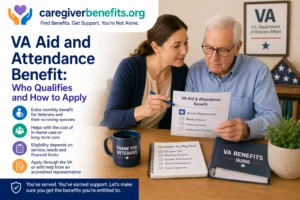
VA PCAFC may include a monthly stipend for approved Primary Family Caregivers of eligible Veterans. VA Aid and Attendance can add a monthly payment to VA pension for qualified Veterans and survivors who need help with daily activities or are housebound.
How to apply
There is no North Carolina caregiver paid family leave application for most private-sector workers. Use the steps below based on what you need.
Step 1: Ask HR for FMLA and paid leave forms
Say, “I need time off to care for my family member with a serious health condition. Please send me the FMLA forms and any paid leave policy that could apply.”
Ask whether you must use PTO or sick leave while on FMLA. Also ask if your employer has a separate caregiver leave policy.
Step 2: Ask the doctor to complete the right certification
For FMLA leave to care for a family member, the common federal form is WH-380-F. Your employer may use its own form if it asks for the same basic information.
The form should explain the health condition, the kind of care needed, and how often you may need leave. You do not have to tell your employer the full diagnosis, but you must give enough facts to show the leave may qualify.
Step 3: Give notice as early as you can
For FMLA, give 30 days’ notice when the need is known ahead of time. If the need is sudden, tell your employer as soon as you can and follow the call-out rule at work.
Step 4: If the issue is home care, apply through Medicaid or DSS
Apply for NC Medicaid through ePASS, by mail, in person, or through your local Department of Social Services. On the application, Medicaid may be called “Medical Assistance.”
Ask about long-term services and supports, CAP/DA, Personal Care Services, and whether the person’s Medicaid plan has a care manager.
Step 5: If the person is a Veteran, check VA caregiver support
Ask VA about PCAFC, the local Caregiver Support Team, Aid and Attendance, and other home and community services. These programs have their own medical and service rules.
How it works with FMLA
FMLA is often the main job-protection rule for North Carolina caregivers. It does not replace your wages by itself. It protects eligible workers from losing their job for covered leave.
FMLA can run at the same time as employer paid leave. For example, your employer may require you to use paid sick leave or PTO during FMLA if its policy says so. That can give you pay during part of the leave, but the FMLA time still counts.
If you are a North Carolina state employee, check your agency HR policy. The state Family Illness Leave policy says it does not run at the same time as Family and Medical Leave and starts only after that leave is fully used.
Keep copies of all notices. If your employer says you are not eligible, ask for the reason in writing. The reason may be your hours, worksite size, length of employment, or the family relationship.
If North Carolina does not have paid leave
If you cannot get paid family leave, do not stop at the first no. You may still have a care-payment route, a job-protection route, or a respite route.
Check these routes
- Can I get paid to be a caregiver?
- Caregiver pay quiz
- Medicaid HCBS waivers explained
- Medicaid spend-down
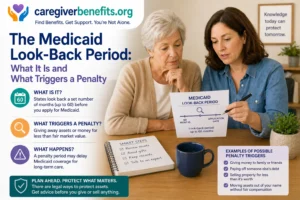
- Medicaid look-back period
- VA Aid and Attendance
- Respite care for caregivers
- Caregiver tax deductions
- Care cost calculator
- Phone scripts
- Caregiver checklists
Who to call first in North Carolina
If your main question is job leave, call your employer’s HR office first. Ask for FMLA and paid leave rules in writing. If you believe your employer is not paying promised wage benefits, contact the North Carolina Department of Labor. If you need help with FMLA rights, contact the U.S. Department of Labor Wage and Hour Division.
If your main question is home care, call your county Department of Social Services or the NC Medicaid Contact Center at 1-888-245-0179. Ask for “Medicaid long-term services and supports,” “CAP/DA,” “Personal Care Services,” and “a care manager.”
If your main question is caregiver support or respite, call your regional Area Agency on Aging and ask for the Family Caregiver Support Program. Ask if Project C.A.R.E., Lifespan Respite, adult day services, or local respite funds are open.
If your loved one is a Veteran, call VA’s Caregiver Support Line and ask for the local Caregiver Support Team.
Phone script
“Hi, I care for a family member in North Carolina. I need to know what help may apply. I am asking about job-protected leave, paid leave, Medicaid home-care services, and respite. Can you tell me which office handles CAP/DA, Personal Care Services, caregiver support, or appeals if we are denied?”
Documents to gather
- your loved one’s full name, date of birth, address, and Social Security number, if available,
- Medicaid card, Medicare card, VA card, or health plan card,
- doctor names, clinic names, and medicine list,
- hospital discharge papers, care plan, or diagnosis notes,
- a list of daily tasks the person cannot do alone,
- proof of income and assets if applying for Medicaid or VA pension,
- your work schedule and the dates or hours you need off,
- your employer’s leave forms,
- any denial letter or notice of reduction.
What to do if the first answer is no
Ask for the reason in writing. A phone “no” is not enough.
For work leave, ask whether you were denied because of hours worked, time employed, employer size, family relationship, or missing doctor paperwork. Ask if another leave policy applies.
For Medicaid, ask for the written notice and appeal deadline. North Carolina Medicaid says recipients have due process rights when a Medicaid service request is denied, reduced, ended, or suspended. Keep the envelope and the notice.
For caregiver support or respite, ask if funds are closed, if there is a wait list, if another county or regional program can screen you, and when to call back.
Important North Carolina warning
North Carolina programs may use different names by county, Medicaid plan, waiver contractor, or aging region. A service may be open in one area and limited in another. Ask the agency to name the exact program, send the rule or notice, and tell you how to appeal or reapply.
FAQ
Does North Carolina pay me to take time off work to care for my parent?
Not through a broad statewide private-sector paid family leave program. Check FMLA for unpaid job protection and ask your employer if paid sick leave, PTO, or caregiver leave can be used.
Can FMLA cover care for an adult parent?
Yes, if you and your employer meet FMLA rules and your parent has a serious health condition. FMLA does not usually cover a parent-in-law under the basic family-care rule.
Can I use FMLA a few hours at a time?
Sometimes. FMLA can be taken all at once, on a reduced schedule, or off and on when medically needed. The doctor’s certification should explain the need.
Does Medicaid pay family caregivers in North Carolina?
Medicaid does not pay every family caregiver. Some programs may allow approved care services, and CAP/Choice may include a personal assistant option. Ask NC Medicaid or the CAP/DA case manager what is allowed for your case.
Does North Carolina have Structured Family Caregiving?
Official NC Medicaid pages checked for this guide did not list a broad adult Structured Family Caregiving program as a main statewide route. Names can change, so ask NC Medicaid, the managed care plan, or the CAP/DA case manager if a similar option exists.
What if my employer says I do not qualify for FMLA?
Ask for the reason in writing. Then check whether the issue is hours worked, time employed, employer size, family relationship, or missing paperwork. You can also contact the U.S. Department of Labor Wage and Hour Division for FMLA questions.
Resumen en espanol
Carolina del Norte no parece tener un programa estatal amplio de licencia familiar pagada para cuidadores en trabajos privados. Pregunte primero a recursos humanos sobre FMLA, tiempo pagado, licencia por enfermedad y reglas de PTO.
Si la persona necesita ayuda en casa, llame al DSS de su condado o a NC Medicaid y pregunte por CAP/DA, Personal Care Services, servicios de largo plazo y ayuda de respiro. Si la persona es Veterano, pregunte al VA por apoyo para cuidadores y Aid and Attendance.
Official sources used
- North Carolina Department of Labor: Promised Wages Including Wage Benefits
- North Carolina Department of Labor: Parental Leave
- U.S. Department of Labor: Family Caregivers and FMLA
- U.S. Department of Labor: FMLA Forms
- U.S. Department of Labor: Family and Medical Leave Act
- NC Office of State Human Resources: Family Illness Leave Policy
- NC Office of State Human Resources: Paid Parental Leave
- NC Medicaid: How To Apply for NC Medicaid
- North Carolina ePASS
- NCDHHS: Local DSS Directory
- NC Medicaid: CAP/DA
- NC Medicaid: Personal Care Services
- NCDHHS Division of Aging: Family Caregiver Support Program
- NCDHHS Division of Aging: NC Lifespan Respite Program
- NCDHHS Division of Aging: Area Agencies on Aging
- VA Caregiver Support Program: PCAFC
- VA: Aid and Attendance benefits and Housebound allowance
About this guide
This guide was written for family caregivers in North Carolina who need clear next steps about paid leave, unpaid job protection, home-care programs, and respite. Program rules can change. Check the official agency before you apply, appeal, quit a job, or make a care plan.
Disclaimer
This is general information, not legal, tax, medical, or financial advice. For legal or tax questions, talk with a qualified professional in your state.