California caregiver benefits guide
Last checked: May 18, 2026
In California, Medicaid is called Medi-Cal. The main self-directed home care route is In-Home Supportive Services, usually called IHSS.
IHSS may let an eligible person choose, hire, and direct a caregiver. That caregiver may be a family member if the person meets IHSS provider rules. Some spouse and parent rules are special, so confirm the exact rule with the county IHSS office before anyone counts on pay.
Quick answer
Yes, some California families can hire a family caregiver through Medi-Cal home care. The main route is IHSS.
The person who needs care must apply through the county IHSS office. If approved, the county authorizes tasks and hours. The care recipient then chooses a provider. A provider can be a family member, friend, neighbor, or someone from the Public Authority registry if that person completes provider enrollment.
Spouse, parent, and live-in rules can be different under IHSS, HCBA Waiver Personal Care Services, and other Medi-Cal routes. Ask the county or waiver agency to confirm the rule for your exact case before a family member starts unpaid work.
Start here: first 3 actions
- Call the county IHSS office. Ask for an IHSS application for the person who needs care. Use the California Department of Social Services county IHSS office list to find the right office.
- Ask for the health care certification step. IHSS usually needs a licensed health care professional to complete the IHSS Health Care Certification form, called SOC 873.
- Do not assume the caregiver can be paid yet. The family caregiver must finish provider enrollment before IHSS can pay them. This includes forms, orientation, fingerprints, and a background check.
Main programs and routes in California
| Route | Who it may help | Where to start |
|---|---|---|
| IHSS | Older adults, blind people, and disabled people who need in-home help so they can stay safely at home. | County IHSS office or county social services office. |
| HCBA Waiver | People at risk of nursing home or other institutional care who need waiver care management and home or community services. | DHCS HCBA Waiver page, the HCBA enrollment dashboard, or the assigned waiver agency. |
| Waiver Personal Care Services, called WPCS | Some HCBA Waiver members who also need waiver personal care services. Parent and spouse provider rules may apply under “extraordinary care” rules. | HCBA Waiver agency, DHCS, or the WPCS help contact listed by DHCS. |
| MSSP | Some older adults who need care management and services to remain at home. Many MSSP participants also receive IHSS. | California Department of Aging MSSP page or local MSSP site. |
| California Paid Family Leave | Workers who need time off work to care for a seriously ill family member and who meet State Disability Insurance rules. This is not Medicaid. | California Employment Development Department, Paid Family Leave. |
What self-directed care means
Self-directed care means the person getting care has more say in who helps them and how approved care tasks are done.
In California IHSS, the county decides if the person qualifies. The county also decides which tasks are approved and how many hours are allowed.
The care recipient then has employer-like duties. This means the recipient may interview, choose, and supervise the provider. The provider can be a family member if that person meets provider enrollment rules and any special family rules that apply.
Self-directed care does not mean the family can pick any number of hours. It also does not mean every helpful task is paid. IHSS pays for authorized tasks and hours only.
For a broader plain-English guide, see Medicaid HCBS waivers explained. For a general caregiver payment overview, see Can I get paid to be a caregiver?.
Program name in California
The main California program to ask about is In-Home Supportive Services, or IHSS.
IHSS is run through county offices under the California Department of Social Services. It helps eligible aged, blind, and disabled people receive in-home help as an alternative to out-of-home care.
Common IHSS services can include help with meals, laundry, shopping, bathing, dressing, moving around the home, certain medical-related tasks called paramedical services, and protective supervision when approved. The county decides what applies after an assessment.
Ask for the IHSS intake unit or IHSS application when you call your county social services office.
Phone script: what to say
“Hi. I need to apply for IHSS for my [mother/father/spouse/child]. They need help at home with daily care. I also want to ask if a family member can enroll as the IHSS provider. Can you tell me the intake steps, the forms we need, and how to request a provider enrollment packet?”
If the person already has Medi-Cal managed care, you can also call the plan and say:
“I am asking about long-term services and supports. We need home care. Should we apply for IHSS through the county, ask about the HCBA Waiver, or ask for another Medi-Cal home care route?”
Who controls the care plan or budget?
In IHSS, the county controls eligibility, approved tasks, and authorized hours. The recipient controls the choice of provider, as long as the provider meets enrollment rules.
The recipient is not handed a cash budget to spend however they want. IHSS pays the enrolled provider for approved hours after timesheets are submitted and approved.
For the HCBA Waiver, the care management team coordinates waiver and state plan services. The team includes a nurse and social worker. The HCBA care plan is more formal. It may involve waiver agencies, DHCS, and a Plan of Treatment.
Who can be hired
For IHSS, California says care providers may include family members, friends, neighbors, or providers from the Public Authority registry.
The care recipient can also use more than one provider if one person cannot work all approved hours.
A person chosen as the provider must complete the provider enrollment process. This includes:
- County provider orientation.
- IHSS Provider Enrollment Form, called SOC 426.
- IHSS Provider Enrollment Agreement, called SOC 846.
- Fingerprints.
- California Department of Justice criminal background check.
- Employment eligibility paperwork.
The provider should not count on being paid until the county says the provider is enrolled and approved. If the provider gives care before approval and later is found not eligible, the family may have to pay that person with private money.
Important warning
Rules can change. Counties, managed care plans, waiver contractors, and agencies may use different names. Ask the county IHSS office or the HCBA waiver agency to confirm the rule for the exact person, program, and provider relationship.
Spouse and adult child rules
Adult child caregivers
An adult child may be able to become an IHSS provider for a parent if the parent qualifies for IHSS and the adult child completes provider enrollment.
The adult child still must follow all rules. They can only be paid for approved tasks and approved hours. They must use the required timesheet system. They may also need to follow Electronic Visit Verification, called EVV, unless a live-in rule applies.
Spouse caregivers
Spouse rules are more technical. Do not rely on a simple yes or no.
Under some California home care rules, a spouse may be treated as a legally responsible person. That can limit what a spouse may be paid to do. In HCBA Waiver Personal Care Services, California policy says a spouse provider may be paid for some services when the service meets the program’s “extraordinary care” rules.
For IHSS, ask the county directly:
- “Can a spouse be the paid provider in this case?”
- “Which IHSS subprogram applies?”
- “Which tasks can a spouse provider be paid for?”
- “Do any limits apply because we live together?”
Parent providers for children
California changed some IHSS rules for minor recipients. A 2023 California Department of Social Services letter says the state eliminated certain provider eligibility rules for minor IHSS recipients. It also says minor recipients in the Personal Care Services Program, called PCSP, still may not hire a parent provider under that route.
This is a key reason to ask the county which IHSS subprogram applies. If the child is in the wrong route for a parent provider request, ask the county to explain whether another IHSS funding route applies.
Live-in providers
A live-in provider is a provider who lives in the same home as the IHSS or WPCS recipient. California says live-in providers may self-certify that they live with the recipient by submitting the live-in self-certification form.
Live-in status may affect EVV check-in and check-out steps. It does not remove all provider rules. A live-in provider still has to enroll, submit timesheets, and follow program limits.
Payroll and timesheets
IHSS is not paid like a private family job. The provider is paid through the IHSS payroll system after the provider is approved and timesheets are submitted.
California says IHSS has two pay periods: the 1st through the 15th, and the 16th through the end of the month. Providers fill out timesheets for the authorized hours they worked. Providers and recipients sign and submit timesheets through the Electronic Services Portal, called ESP.
ESP lets providers submit electronic timesheets, see payment status, see payment history, set up or change direct deposit, and submit sick leave claims. Recipients can approve or reject timesheets online.
IHSS and WPCS providers must use an EVV method. Non-live-in providers must check in and check out and say whether services were in the home or community. California says the provider is paid based on reported hours worked, not just the time between check-in and check-out.
Common pay delays
- The provider has not finished orientation.
- Fingerprints or background check are not complete.
- The recipient did not approve the timesheet.
- The provider entered hours over the weekly limit.
- EVV entries are missing or wrong.
- Direct deposit was not set up or changed.
- The county has not assigned the provider to the recipient.
For ESP or timesheet problems, California lists the IHSS Service Desk for providers and recipients at 866-376-7066. For case questions, call the county IHSS worker or county IHSS office.
For taxes, see caregiver tax deductions. Tax rules can be different for live-in IHSS pay, family members, and other work.
How to switch from agency care
Some people get care through an agency, a Medi-Cal managed care plan, a waiver agency, or another program. Others use a private caregiver while waiting for IHSS.
If you want to switch to a family caregiver, ask which program is paying for the current help. Then ask whether the person can use IHSS or another self-directed route instead.
Step 1: Ask what program is paying now
Call the plan, agency, or county worker. Ask, “Is this IHSS, HCBA Waiver, MSSP, Community Supports, private-pay care, or another program?”
Step 2: Ask if the care recipient can choose a provider
Say, “We want to know if a family member can be the paid provider. What program rules apply?”
Step 3: Do not stop care until the new setup is approved
Make sure the new provider is enrolled, hours are assigned, and timesheets are ready before ending agency care.
Step 4: Ask for the decision in writing
If the county, plan, or waiver agency says no, ask for the notice, rule, or appeal instructions in writing.
Who to call first in California
For most families, call in this order:
- County IHSS office. Ask for IHSS intake or the assigned IHSS worker.
- County Public Authority. Ask about provider enrollment, provider registry, and family provider steps.
- Medi-Cal managed care plan. Ask for long-term services and supports if the person is in managed care.
- HCBA Waiver agency or DHCS. Ask about HCBA Waiver, WPCS, waitlist status, and parent or spouse provider rules.
- California Department of Aging or local MSSP site. Ask about MSSP if the person is an older adult who needs care management.
Use exact words. Ask:
- “Is IHSS the right program for in-home care?”
- “Can my family member be the paid provider?”
- “Does the spouse, parent, adult child, or live-in rule change this case?”
- “Which forms do we need?”
- “Can you send the Notice of Action if services are denied or reduced?”
Documents to gather
- Full legal name, date of birth, address, and phone number for the person who needs care.
- Medi-Cal card or Benefits Identification Card, if they have one.
- Social Security award letter, SSI letter, pension letter, or other income proof if requested.
- Recent medical records, diagnosis list, hospital discharge papers, or care notes.
- List of daily tasks the person cannot do safely alone.
- Doctor, clinic, or licensed health care professional contact information for SOC 873.
- Current caregiver schedule, if someone is already helping.
- Provider’s ID, Social Security card, and work authorization documents if the family member wants to enroll as provider.
- Any denial, reduction, or Notice of Action letter.
Use caregiver checklists to track calls and papers. Use phone scripts if you need help making the first call.
What to do if the first answer is no
Ask why. Then ask for the rule in writing.
Sometimes “no” means the person does not qualify. Sometimes it means the county needs a form. Sometimes it means the family caregiver can help, but cannot be paid under that exact route. Sometimes the person needs a different Medi-Cal route, a waiver request, or a reassessment.
Ask these questions:
- “Was the IHSS application denied, or was only the provider denied?”
- “Was the care recipient found ineligible, or were the hours lower than expected?”
- “Can we ask for a reassessment?”
- “Can we submit more medical proof?”
- “Can we request a State Hearing?”
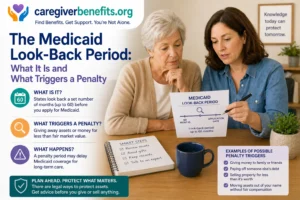
If the issue is Medi-Cal income or share of cost, read Medicaid spend-down. If the family is worried about transfers or long-term care assets, read Medicaid look-back period.
Common problems
The family starts before approval
This is risky. IHSS can deny provider enrollment. California forms warn that if a chosen provider works before approval and is later found ineligible, the recipient may have to pay that person privately.
The doctor form is late or too vague
IHSS uses the SOC 873 health care certification. The licensed health care professional must say the person cannot do some daily activities independently and would be at risk of out-of-home care without IHSS. Ask the doctor to be clear about daily function, safety, and care needs.
The hours do not match the real care load
Keep a simple daily log for one or two weeks. Write down bathing, dressing, transfers, toileting, meals, laundry, shopping, supervision, and medical-related tasks. Ask for a reassessment if needs changed.
The provider goes over weekly hours
IHSS has workweek and overtime rules. Going over limits can cause violations and payment trouble. Ask the county before a provider works extra hours.
Family thinks Paid Family Leave is the same as IHSS
California Paid Family Leave is different. It is a wage replacement benefit for eligible workers who take time off to care for a seriously ill family member. It is not a Medi-Cal home care payment and does not make someone an IHSS provider.
The case needs more than IHSS
If the person may need nursing facility level care, ask about HCBA Waiver and other home and community-based options. The HCBA Waiver has a waitlist. Confirm current status with DHCS or the waiver agency.
Do not miss California Paid Family Leave
If you are a worker taking time off to care for a seriously ill family member, California Paid Family Leave may help replace part of your wages for a limited time.
Eligible family members can include a child, parent, parent-in-law, grandparent, grandchild, sibling, spouse, or registered domestic partner. EDD says citizenship and immigration status do not affect eligibility.
PFL is not IHSS. It does not pay you to be the ongoing home care worker. It may help while you take time off work. EDD says a care claim needs required parts of the claim form and a medical certification.
For help comparing home care costs and family options, see care cost calculator. For a quick starting point, use Can I get paid quiz.
Other help to ask about
IHSS may not cover every need. Ask the county, health plan, or Area Agency on Aging about backup care, meals, transportation, adult day programs, home safety changes, and respite.
Respite means short-term relief for the regular caregiver. Start here: respite care for caregivers.
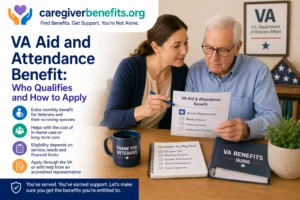
If the person is a veteran or surviving spouse, ask about VA Aid and Attendance. See VA Aid and Attendance.
FAQ
Can I get paid by Medi-Cal to care for my parent in California?
Maybe. The main route is IHSS. Your parent must qualify for IHSS. You must complete provider enrollment and be approved before IHSS pays you.
Can a spouse be paid as the caregiver?
Sometimes, but spouse rules are special. Ask the county IHSS office or HCBA Waiver agency which tasks and program rules apply. Do not assume all spouse care can be paid.
Can a parent be paid to care for a child?
Sometimes. California changed some IHSS rules for minor recipients, but there are still limits under some routes, including PCSP. Ask the county which IHSS subprogram applies.
Who approves the hours?
The county approves IHSS tasks and hours after assessment. The family cannot set the number of paid hours on its own.
Can IHSS pay for care already given?
Sometimes providers may access retroactive timesheets after they are enrolled and assigned, but do not count on back pay until the county confirms the start date and provider status.
What if the county denies IHSS or cuts hours?
Ask for the Notice of Action. Read the reason. You can ask about a State Hearing. Gather medical proof, care logs, witness statements, and records that show the person needs help.
Resumen en español
En California, Medicaid se llama Medi-Cal. La opción principal para cuidado en casa con un cuidador elegido por la persona es IHSS.
La persona que necesita ayuda debe solicitar IHSS por medio del condado. Si aprueban el caso, el condado decide las tareas y horas. Un familiar puede ser proveedor si cumple las reglas de inscripción. Las reglas para esposo o esposa, padres, hijos adultos y personas que viven en la misma casa pueden cambiar según el programa.
About this guide
This guide was written for family caregivers who need to know where to start. It focuses on California Medi-Cal home care, IHSS, HCBA Waiver, WPCS, MSSP, and California Paid Family Leave.
Program names, county steps, and waiver rules may change. Always confirm with the county IHSS office, DHCS, the waiver agency, the managed care plan, or EDD before making work or money decisions.
Disclaimer
This is general information, not legal, tax, medical, or financial advice. For legal or tax questions, talk with a qualified professional in your state.
Official sources used
- California Department of Social Services: In-Home Supportive Services (IHSS)
- California Department of Social Services: IHSS Provider Resources
- California Department of Social Services: Finding, Interviewing, and Hiring a Provider
- California Department of Social Services: IHSS Provider Orientation Process
- California Department of Social Services: Electronic Services Portal
- California Department of Social Services: Electronic Visit Verification for IHSS and WPCS
- California Department of Social Services: County IHSS Offices
- California Department of Social Services: IHSS Health Care Certification Form SOC 873
- California Department of Social Services: Recipient Designation of Provider SOC 426A
- California Department of Social Services: All County Letter 23-106
- California Department of Health Care Services: 1915(c) Home and Community-Based Services Waivers
- California Department of Health Care Services: Home and Community-Based Alternatives Waiver
- California Department of Health Care Services: Waiver Personal Care Services
- California Department of Health Care Services: HCBA Waiver Policy Letters
- California Department of Health Care Services: HCBA PL 24-003 WPCS Parent and Spouse Providers
- California Department of Aging: Multipurpose Senior Services Program
- California Employment Development Department: Paid Family Leave for Caregivers
- California Employment Development Department: Paid Family Leave Claim Process